Guizot's will, written in December 1873, begins: «I die in the bosom of the Christian Reformed Church of France, where I was born and where I congratulate myself for having been born». The qualifier «Christian», which is not part of the official title, shows that although Guizot felt himself to be a Protestant through his personal ties, he felt himself to be first and foremost a Christian. For him, union took precedence over distinction.
His Protestantism comes from both sides of his ancestry, with two remarkable figures: his grandfather Jean Guizot (1729-1766), whom he never knew, a pastor in the «Desert», i.e. in the clandestinity to which the Edict of Fontainebleau of 1685 condemned Protestants, and his mother, who was a Protestant. Élisabeth Bonicel, whose demanding and austere piety, in the Huguenot tradition, stayed with him for much of his life. The teenage years spent in Geneva, In 1822, he devoted a monograph to the city of Calvin, which was reprinted and expanded in 1869. On his return to Paris, in 1806, he even joined the Scottish rite Masonic lodge Le Phénix, where the new spirit of the Réveil, the movement for the regeneration of Protestantism that had come from England and passed through Switzerland, was blowing. Without lapsing into its fideistic and sentimental effusions, Guizot received its influence, essentially the central place of the Bible at the foundation and in the exercise of religious faith. This revival was expressed in the many associations of which Guizot was soon a member and which he sometimes chaired: Société pour l'encouragement de l'instruction primaire parmi les protestants de France (1817), Société biblique protestante de Paris (1818), Société protestante de prévoyance et de secours mutuel (1825), Société de la morale chrétienne (1821), where liberal Christians from good society met. Since 1815, he had been a member of the consistory of the Reformed Church of Paris, a position he held until his death. His commitment to the church went hand in hand with his devotion to the cause.
His two marriages took place at the Oratoire du Louvre temple (and also at the Madeleine church, as his two wives were of Catholic origin), the five children were baptised Protestants, and the three survivors married good-natured Protestants at the temple. In Paris, no one missed Sunday services, in one temple or another depending on the quality of the speaker. Visit Val-Richer, Bible reading and prayers every day, home worship on Sundays. And regular donations to charities.
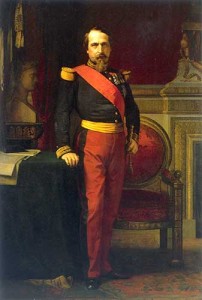
Not since Sully had a French Protestant been appointed to the highest offices of state. No doubt Guizot chose to remain discreet about his religious affiliation in the exercise of his responsibilities. In order not to arouse suspicion, he had the Religious Affairs Department detached from the Ministry of Foreign Affairs. Public education, He does not attend any denominational meetings while in government. He shows respect and support for the Catholic Church in France. Nevertheless, he is now the most prominent figure in French Protestantism, both outside and within the Reformed churches. After his retirement from public affairs, this position, far from diminishing, became even stronger. Under the Second Empire, he became more and more actively involved in the life of the Reformed Church, lobbying the public authorities to ensure that Protestants« freedom of worship and association was respected, particularly that of the Free Churches, and to obtain a particular appointment to one or other of the two Protestant theology faculties. He was received by the ministers Fortoul and Rouland, even summoning them to his home, and by Napoleon III himself on several occasions. Above all, at the beginning of 1870, he obtained from Émile Ollivier the principle of convening a national synod of the Reformed Church, and had it confirmed by Thiers as head of the provisional government of the Republic. On 6 June 1872, the first Reformed synod since 1659 opened at the Temple du Saint-Esprit. Guizot, who had prepared the synod with great care, played a leading role, promoting the positions of the orthodox or evangelical movement, which was committed to defining and respecting a common confession of faith, in opposition to the liberals. The old fighter had thrown down his last gauntlet. On 30 June, all the delegates sent him a letter: »The Reformed Church of France as a whole will be grateful to you for the pious zeal with which you have worked for its recovery and the defence of its interests and rights".»
However, within Protestantism, Guizot was far from always unanimously supported. The main criticism came from his attitude towards Catholicism in general and the Roman Church in particular, which he considered to be too accommodating, even complacent. In fact, as a historian, he knew that Catholicism had been, was and would remain the overwhelming majority religion within Christianity in France. He therefore believed, as a Christian, that all Christians, beyond their legitimate differences, should unite against the rising forces of materialism and atheism, which were fermenting social anarchy. In June 1838, he wrote: «France will not become Protestant. Protestantism will not perish in France (...) The struggle of ideas and empire today is not between Catholicism and Protestantism. Impiety and immorality are the enemies they both have to fight. Reviving religious life is the work that calls them together». The first sentence in particular provoked strong reactions from Guizot's co-religionists, who in his governmental practice sometimes gave the impression of favouring Catholics, for example by supporting their missionaries in Tahiti against the Protestant missionaries in London, or the Swiss Catholic cantons of the Sonderbund against the government in Berne. Guizot's idea was, in order to bring about change in the Roman Church, to support the most enlightened faction of Catholics, the liberals, embodied by Montalembert, with whom he built up a wonderful friendship, and by Lacordaire. It was when he received the Dominican at the Académie Française in January 1861 that he unleashed a scandal among Protestants: he spoke out in favour of the Pope's temporal power, which was then threatened by the Italian unitary movement. In April, he did it again before an assembly of Protestants, and even his closest friends did not understand him. He explained himself more fully in a book published in October, The Christian Church and society in 1861, It was necessary to take the Catholic Church as it was, defend its freedoms and join forces with it against the forces of evil, while hoping that it would be transformed. Hardly anyone in the Protestant world followed him in this line of reasoning, which seemed more in the service of order - internal and European - than of the faith of the Gospel.
Within the Reformed Church itself, its positions also reflected political and social as well as religious concerns. The liberals, who integrated the achievements of science into theology and exegesis and considered individual conscience to be the sole authority in matters of faith, were increasingly opposed by the orthodox or evangelicals, for whom Scripture was the supreme source of Christian truth and who believed that the Reformed Church should be structured by a common confession of faith and discipline. Guizot was the most prominent figure in this camp, which was in the majority. The liberals attacked him personally, denouncing him as «the Pope of the Protestants» and trying to defeat him in the elections to the Presbyteral Council of Paris in 1865. The orthodox eventually prevailed, but the conflict between the two tendencies of the Reformed Church left its mark, the depth of which was revealed by the synod of 1872, which the liberals refused.
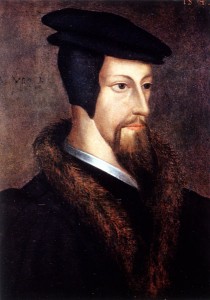
Guizot is therefore an atypical Protestant. His very beliefs are difficult to define. They have been described as a «minimum of Christianity», a «religion completely in the air». For him, reason keeps faith at a distance, placing it in another sphere. In his conception of history, God does not intervene as a primary cause. In 1853, he wrote: «In our personal destiny, as in that of the world, I know neither the motive nor the ways of God». A disciple of Calvin, he nevertheless rejected predestination, and nowhere did he express an opinion on the presence of Christ in communion, or on the question of grace. In the three volumes of Meditations on the Christian religion which he published between 1864 and 1868, he made belief in the supernatural the cornerstone of Christianity, and defined five dogmas based on it: creation, providence, original sin, incarnation and redemption. But no mention is made of the Trinity, the foundation of the Christian religion. It is as if Guizot, a poor theologian, confined himself to noting the mysteries and bowing before them without seeking to penetrate them. His robust soul was not inclined to exaltation, fervour or anxiety. «In the relations of my soul with God», he wrote in 1853, «I have never felt the need for any intermediary; in joy or in sorrow, to give thanks or to implore help, I address Him directly, spontaneously; I live with Him in the most submissive intimacy, I dare say, but in an immediate and trusting intimacy».»