«One month in 1848»
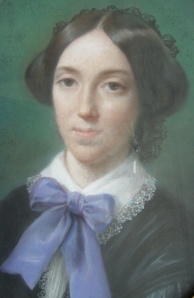
Brompton, 6 August 1848
I wanted, my dear sister, to write down for you our memories of those sad days we spent together, from 22 February to the end of March; there was enough in that month to fill many years, and I thought that ten years from now you would like to find a trace of the emotions, the worries and the joys we experienced. I know that when I say my impressions, I'm more or less saying yours, because as Mrs Tastu told us[1] «We have the same faith, the same hope, the same love»; and I like to think that later, whether we are separated or reunited, you will enjoy seeing this little notebook written by someone who loves you more than she says, perhaps more than you think.
I therefore begin my account on 23 February 1848. The day before, my father had wanted us not to stay at the Ministry on Tuesday; he was expecting noise outside the Hotel and feared it for my grandmother. So we left home at nine o'clock on Tuesday morning to spend the day at Madame Lenormant's house.[2] ; We were going to come back for dinner with him, but we never got back; we were so reassured in the morning by the news that the deputies would not be going to the banquet[3], We had left Henriette and I with Granny, Guillaume had gone to school and Mum had gone to see her. We arrived at Mrs Lenormant's and found her very ill; Henriette and I had left with Granny, Guillaume had gone to college and Mlle Wisley[4] would only come later.
On our way to ministry[5] to the rue des Petits Champs, we noticed the perfect tranquillity of the streets; impossible to distinguish any difference between the attitude of the workers that day and that of every day; from time to time we saw a few groups reading the proclamations of the Prefect of Police; otherwise perfect tranquillity the first part of the day passed very peacefully; towards one o'clock came Mr Génie[6] who tells us that we've come to make a bit of a fuss in front of the Ministry; nothing serious. We see several people, Mrs Grandpierre[7], Coste[8], Meurand[9], my uncle[10], All of them say that the gatherings are few in number and made up largely of kids from Paris who look like they're playing a game. What a game! Mlle Wisley and Juliette Lenormant went out and came back to us very quiet; it wasn't a riot, the day ended without us learning anything worrying; however, in the evening we received a note from my father telling us to sleep at Mrs Lenormant's; he thought it wasn't over and that it was better to stay where we were; he wasn't wrong; this was only the beginning.
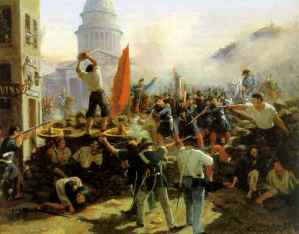
On Wednesday morning, Georges brought us another letter from my father, telling us that he had slept with the Duc de Broglie and that he hoped to see us again in the evening; nothing new during the night; a few attempts at barricades in the suburbs; we had breakfast, then came the same friends as the day before, (Mlle Wisley and Guillaume had joined us on Tuesday morning). We all waited for the news and watched with some concern as bands of armed men began to move through the streets at four o'clock. M. Lenormant returned very disturbed and told us that the King had dismissed his ministry; this came as a great surprise to us and we saw with great sorrow the enormous mistake that had just been made, a mistake that may have decided the Revolution. During dinner, M.M. Herbet arrived[11], de Carné[12], de Lavergne[13], all upset by the news of the change of ministry and very worried about what was to follow. Mr Rousset[14], and Meurand also arrive very sad. At half past nine we see Mr Libri[15] and Mr Hamon[16]a painful discussion forces Mlle Wisley to leave us in the evening, to her great regret and ours; she is leaving with M. Coste to go and sleep with her friends, the Fauquets, who live in the rue de la Chaussée d'Antin. A few moments before she left, we had heard the shooting in front of the Ministry of Foreign Affairs, and we were all extremely agitated. That evening was one of the most painful of that painful week. As he left, Mlle Wisley, having arrived at the boulevard, was prevented from crossing by the cavalry regiments that were arriving and was obliged to go up the streets to the rue Montmartre. At ten o'clock we went to bed exhausted by the day, very worried, but not anticipating what the next day would bring in terms of grief and anxiety.
I can say that we didn't sleep a wink that night; we slept with our dear good mother, Henriette and I, in the living room, Guillaume in the library next door. Towards midnight, we heard a hardware shop opposite the library being broken into; a gang of young men had come there to buy gunpowder and weapons. I was very tired and agitated and I can't tell you what effect these rifle butts and furious shouts had on me, making us jump into our beds. A fairly calm hour passed, and then we were once again shaken by the noise of the barricades being erected on all sides around us; during the night the Rue de Richelieu was cut off by thirty barricades; the recall or the general was beaten at every moment. It was a night I shall never forget for the rest of my life; what anxiety! What suffering!
On Thursday morning at 6 o'clock we got up and were terrified by the number of armed men and national guards with them, who passed by at every moment; they shouted «Long live the Reformation»; many of them even shouted «Long live the Republic» and always: «Down with Guizot». The evening before, the whole of Paris had been forced to be illuminated and nothing could be more sinister than these cries of «Lampions, lampions» mixed with the Marseillaise, «Ça ira» and «Mourir pour la Patrie». The most sinister figures were to be seen in the bands, even a few women here and there; poor misguided creatures who were so sadly leaving the place of humility and peace where God has placed them. Rose and her husband came at eight o'clock on Thursday morning, she full of courage and willpower, telling us how she had spent the night looking after the wounded in the ground floor rooms of the Ministry, in that blue room where on the Friday before two hundred people had come to congratulate my father on all his recent successes and where on Sunday 20th we were so happily reunited, listening to Meurand and my uncle sing us a thousand crazy songs, after a very cheerful dinner; Neither of us feared that we would have been surprised if we had been told that on Sunday 27th we would be separated without even having said goodbye to each other for so long without seeing each other again. Whoever had made such a prediction would have been called a madman and a prophet of ill omen, and we would no more have believed his words than the Trojans believed those of the prophetess Cassandra. I cannot recall without sadness all the mockery made of this banquet and this riot that had been predicted for so long: «God's ways are not our ways and his thoughts are not our thoughts». On Thursday morning we still thought we were going to settle in our little house in the rue Ville l'Évêque, and by evening we were thinking of nothing else but leaving France. So many things in one day, so many years in one hour! At eleven o'clock on Thursday, Mr Coste arrived, all upset and looking exhausted. He had just crossed the Place de la Concorde in the middle of a huge crowd of troops, insurgents and onlookers, and he was very worried. After lunch, he left again, leaving us in a state of anguish that was heightened every moment by the frenzied cries of the insurgent troops rushing towards the Tuileries; all were armed, some with rifles or pistols, others with pikes and sabres; men, young men, children; We would leave the window for a moment, then a new band would pass by and lead us back to it; each troop had a red flag; how we rejoiced then at our poor grandmother's deafness, she would have suffered so much to hear those cries which would have reminded her of days which those that were passing by resembled only too closely. At about two o'clock, Mr Coste returned and told us that he had just heard talk in the streets of the King's abdication; we did not want to believe it. He went out again and came back knowing positively that the King had abdicated and saying that the Republic had been proclaimed. So many events since the morning. How quickly the torrent had overflowed and how sad to think that in a few hours a few thousand fools had destroyed what had been so difficult to establish: the peace and happiness of France and had proclaimed, against the will of the country, a form of government which for four months had given France nothing but misery and shame. At about half past three, M. Plichon[17] They had seen the heroism and nobility of Mme la duchesse d'Orléans and the courageous devotion of M. le duc de Nemours. But what was the point of heroism and devotion? The unfortunate people, led astray, listened only to the voices of those who were leading them to their ruin and, seduced by the crazy theories of some or the corrupting doctrines of others, drove out a King who had given his country eighteen years of glory and prosperity and exiled men who had used all that God had given them in talent, courage and wisdom in the service of their country.
Mr Plichon and Mr de Lavergne started to cry when they saw us and it took a lot of willpower for me not to imitate them; so many emotions had broken me, but I felt that this was not the time to cry. My grandmother was exhausted by such violent shocks and our tears would have hurt her so much. Mr Grandpierre came and said a prayer that gave us all a bit of courage. Poor Mr Grandpierre! His dear little daughter had just fallen ill, and from then on she suffered constantly until the Lord took pity on her poor parents and took her back to Himself. What pain! A little later we saw M. Rousset and Meurand; these dear friends were appalled; we could hear the insurgents passing in the street as they returned from pillaging the Tuileries; each one was carrying a trophy of his triumph at the end of his rifle or pike; the King's livery, the hats of the municipal guards, so horribly massacred a few steps from us at the water tower, the dresses and handkerchiefs of the Queen or the Princesses. It was heartbreaking! And my father? What had become of him? That's what we were thinking with anguish, what all our friends were asking us. Could he have escaped? Had he gone to the Chamber? Or to the Tuileries? We hadn't heard from him since the evening before, not a word since he told us about the change of ministry. At five o'clock we saw Béhier[18] and Mr Lemoinne[19]. What a change since we had seen them! On Monday they had lunch with us and although they were both rather worried, they were far from foreseeing what would happen. Béhier was in a state of extreme despondency; M. Lemoinne very sad. During this horrible day, our good friend Mme Lenormant was in bed, very ill and, naturally, in a state of agitation that greatly increased the seriousness of her illness. Poor friends! What pains we gave them! At half past seven we sat down to dinner; it was all for show because Guillaume and François[20] were the only ones to touch dinner. In the evening, we saw a few more people, again M. de Lavergne, M. Herbet, Meurand, all coming to ask us about my father and adding to our already great anxiety. What anguish! God knows all the thoughts that went through our hearts, we didn't dare talk to each other about what interested us most. I'll never forget the look on my grandmother's face that evening, as she lay on the sofa in the living room, her body broken, her physical strength unable to withstand such a day, but what strength of soul! What admirable calm! What faith! What confidence in the One she had believed in! Into His hands she placed the son of so many prayers and so many tears, the father of the three children kneeling before her who, like her, found no rest except in prayer. In the Journal des débats, It is during trials like these that we discover the depths of the heart, and nothing makes us appreciate hearts better than to see them at the moment of great suffering! I really felt this during the days of this Revolution when we received so many proofs of affection and devotion, when we learnt to rely on people whom we did not believe to be true friends. At nine o'clock, we went to bed, thinking we wouldn't sleep for a moment and very worried about what would happen during the night; we expected everything from these unfortunate people left to their own devices at the moment of such a surprising triumph and we feared that Paris would be looted or set on fire.
Thanks be to God, the night was quiet and we were so tired that we all slept well; we needed to gain a little strength for Friday, which was so full of suffering and difficulties. On Friday morning, we had hardly woken up when M. Plichon arrived; he had come to ask about my father; to the question «where is M. Guizot?», we always had to reply that we knew nothing. Then Cornélis de Witt arrived[21] who tells Guillaume about the sacking of the Tuileries, then M. Coste, M. Rousset, M. Grandpierre who comes to tell us on behalf of Mlle de Chabaud[22] that she would accompany us wherever we went, because at that time we were no longer thinking about the Rue Ville L'Évêque; we had to think about leaving France. We were not surprised by our dear friend's offer, we were counting on it, but I cannot say what a rest and what a joy it was for me to receive this offer, it was a moment of happiness in the midst of great sorrow. Around midday, my uncle, Meurand etc. came. At three o'clock, M. Delahante[23]. He had come to take us away; he wanted the three of us, Guillaume and ourselves, to leave on the railway from Le Havre that very evening. This proposal threw us into turmoil, into terrible anxiety; we didn't know what to do. We decided to ask him to go to the Duc de Broglie to find out what had become of my father. He left; during his absence Mlle de Chabaud. We were so happy to see her! We asked her to be ready to leave in the evening. What hours! I didn't know what to think or do. The idea of leaving this mother, who obviously couldn't leave with us, the sight of her grief and worries, were doing me terrible harm, and if I had a little courage and willpower, it was from the goodness of God that I received them; on my own, I was good for nothing. The three of us spent two hours sitting or kneeling before our mother, embracing her, trying to console her, reading her one of God's promises of mercy from time to time, and praying with her at all times. At five o'clock, Mr Delahante returned. He had not found the Duc de Broglie, so we had to decide without knowing where my father was, without his advice; we had to judge for ourselves what to do. On the one hand, we were pushed to leave by Mr Delahante and Madame Lenormant, who thought it essential for my father's peace of mind; on the other, we were held back by our own hearts, which bound us to this old and exhausted mother who had been so much to us. There was a moment when it seemed to me that all my judgement had gone and that I wouldn't be able to make up my mind. However, we gave in to the prayers and advice of our friends and resolved to leave that very evening at ten o'clock. Mr Delahante was to pick us up and take us to the railway, while Mr Meurand was to take Mr Delahante and Mr Meurand to the railway.lle de Chabaud.
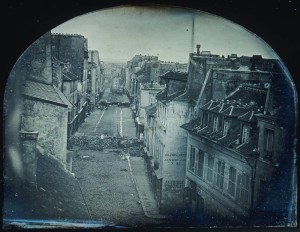
I had much more rest when this decision was taken. There is nothing worse at a time like this than uncertainty; however, we were left with a great burden; nothing from my father, not a word from him since Wednesday evening. At six o'clock we saw Mr Piscatory arrive.[24]. He seemed to us to be a saviour, because he knew where my father was. He told Granny that my father had left, but he took Henriette into the next room and told her that he had not left, that he might not leave for a few days, but that there was no need for us to hesitate, that we had to go to England as soon as possible, that it would be a great relief for my father to know that we were there. The evening went well, albeit sadly. Before dinner Henriette said goodbye to Mr Lemoinne, Mr Rousset and so on. Every moment that passed brought us closer to separation and I never tired of looking at and kissing this mother to whom we had to say goodbye. Mr Plichon and Mr Coste came, and when we left them we shook their hands to make them understand that it was the last time; Meurand came, and Mrs Lenormant arranged all the plans for his departure with him; how sad he was! We waited for Mr Delahante until a quarter to eleven. We thought we were catching the eleven o'clock train and we couldn't understand the delay. He arrives with Mr Berry. The railway was cut off; my grandmother was told nothing and we prepared to leave. It didn't take long to get ready, because we put stockings and handkerchiefs in Mr Delahante's gibernation bag. M. Berry took charge of Guillaume, poor child who was so sad to leave so many friends and his school. His sorrow hurt me, although he showed it very little. We said goodbye to him, then to our mother, to the whole family to whom we owed so much, to my dear Rose who burst into tears, to several of our servants who were there and most of whom gave us proofs of devotion that we will never forget. It was one of those minutes that count for hours in life, that we always remember but never recount. I left with Mr Delahante, Henriette with Mr Lenormant. The weather was dreadful and we crossed the boulevard in the pouring rain; we had to go over several barricades. Henriette, who had not taken the same route as me, crossed a very high one and was told by the men guarding her «watch your feet, Madame». This sentence, spoken by armed men wearing red caps and guarding the barricades with torches, had a singular effect. There is a strange mixture of politeness and rudeness in the French people. I arrived at M. Delahante's house at half past eleven, very wet, very tired and very sad. I thought I'd find a woman to welcome us; I don't know why we thought he was married, but when we arrived we were very disturbed to see that he wasn't married. Henriette came ten minutes after me. Mr Lenormant left us. Seeing him go, it seemed to me that the last link had been broken and we were left completely to our own devices. Mr Delahante, in a very unnecessary precaution, made us work before going to bed, unpacking what little laundry we had. We felt very ill at ease in this little salon, all alone with a young man we had rarely seen. It was very embarrassing, but what could we do? All we could do was wait. At midnight, Mr Delahante left us and we went to bed. He had given us his room and, with charming delicacy, he went to spend the night at the guardhouse. I was so tired that I slept that night, Henriette not at all. We got up at seven o'clock on Saturday morning, hoping to leave during the day. Our dresses, petticoats, etc. were so dirty that we spent over an hour brushing them. We dressed and combed our hair with great difficulty; it was the first time. At about ten o'clock, Mr Delahante came to see us and left us to go and find a way of getting us to leave. We had lunch in our room. He forbade us to go into the living room and locked us in. At two o'clock he came back; there was no way of leaving that day. Seeing this, we asked him to go and get Mlle de Chabaud or Mlle Wisley. It was impossible for us to stay alone with him any longer and it was difficult to tell him. At last he understood and sent for Mlle Wisley. What a pleasure it was for us to see her again. We had been separated for three days, and what days they were! They seemed like years.
Saturday passed; on Sunday morning we persecuted Mr Delahante to get us to leave; he was reluctant. We were very worried about the idea that my father might arrive in England thinking he would find us there, and we knew how tormented he would be not to see us there. And then those hours, those days spent in complete material inaction, when our minds were so restless, our hearts so preoccupied, were so painful that it seemed to us that the journey, by forcing us to think of something else, would do us good. On Sunday mornings, seeing the people on their way to the Redemption pass under our windows, we felt that the journey, by forcing us to think of something else, would do us good.[25] (Mr Delahante's house is rue Chauchat, 17), my heart sank; I thought that the following Sunday I would be very far from all my friends and I can't say how sad that day was. Mr Delahante only came back for dinner; he had spent seven hours at the Grande Revue and consequently had been unable to arrange for us to leave. He asked our permission to dine with us; this scruple would have amused us if anything could have amused us at that moment. In the evening, he gave us the great pleasure of going to ask Mr Berry to bring Guillaume to us. We are very, very happy to see our dear brother again; he was as bored as we were in his solitude and, like us, was in a great hurry to leave. We went to bed at eleven. On Monday morning, we begged Mr Delahante to see if he could find a way for us to leave France. The day passed without us seeing him again. Nothing was more painful than this uncertainty, this impossibility of knowing what we were going to do an hour later.
Finally, at five o'clock, Mr Delahante returned and told us that we would be leaving in the evening. One of his uncles, the commander of the Senlis National Guard, had come to spend the day in Paris and Mr Delahante had said to him: «Providence has sent you; you are going to take Mr Delahante to Paris.lles Guizot. His uncle accepted the proposal with a kindness that we shall never forget. We sent for the essentials from Mme Lenormant, telling her that we were leaving that very evening. M. Berry brought Guillaume to dinner to bid us farewell, and at eight o'clock we climbed into M. Charles Delahante's carriage, without, so to speak, M. Adrien Delahante having allowed us to thank him for all the friendship he had shown us and the care he had given us. We took an English passport with us and Mr A. Delahante gave us a man we trusted, who had been very helpful, to accompany us as far as Boulogne. We crossed Paris. The barricades were being torn down and cars were once again making their way through the streets. My heart sank with every step that took us a little further away from our mother and all the friends we had left behind without even being able to say goodbye to them. Our journey went very smoothly and at two o'clock in the morning we arrived in Senlis, at the home of Mr C. Delahante, where we were to spend the night. The door was opened by a maid who was still rubbing her eyes and who was obviously very disturbed to see three women she had never seen before arrive at this hour. Mrs Delahante was, of course, in bed, and as we crossed the garden to get to the house, Mr Delahante warned us not to make any noise for fear that his wife might think she heard thieves and fire a pistol at us through the window; the prospect was not very pleasant, so we entered as quietly as possible, into a large house which might have been beautiful if it had been well arranged, but which was very cold, very damp and looked very uncomfortable. We were taken to Mr Delahante's room where a fire was lit for us with great difficulty while beds were being prepared. After waiting for half an hour, we went, Mr. Delahante and I, to our room.lle Wisley went to bed on the first floor and the two of us on the ground floor in a large room that looked as if it had never been lived in. At half past three we went to bed in a very damp bed, but we were so tired and so tired that we couldn't sleep. sleepy that we soon fell asleep. On Tuesday morning, at nine o'clock, the maid came to wake us up; as we had to pass for Englishwomen, we spoke to her in Anglo-French jargon, but it seems that our accent was rather strange, because the maid said to her mistress «ah, Madame, you can tell they are Englishwomen; they speak a Gascon». We got dressed and at half past ten we went downstairs for lunch. We found Mme Delahante downstairs, who welcomed us with touching kindness and affection. During these days of hardship we had moments of real consolation, finding in people we hardly knew a sympathy that did good to our deeply sad hearts.
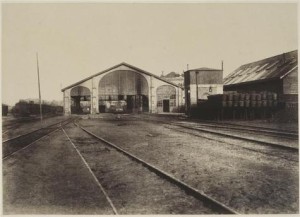
At midday, Mrs Delahante, Mrlle Wisley and I got in the car to go to Creil (a station on the Chemin de Fer du Nord, two leagues from Senlis). When we got to Creil, we entered the waiting room, which was too pompous a name for the dirty little room it was. The troops garrisoned at Creil filled the 1re All the travellers were in the same room; even if there had been no soldiers there, was it not necessary in the early days of the republican regime to have that touching fraternity which would abolish all distinctions, destroy rank and fortune and establish complete equality between the rich and the poor, the learned and the ignorant, the philanthropist and the convict? We waited for an hour in this room which contained, apart from us, only people of the lowest class: women of the people, very dishevelled children, a few soldiers who smoked their pipes while occupying in turn the only chair there was in the room, peasants and a very ugly, very dirty and very talkative man, who made great speeches about Louis Philippe, Guizot and the Republic and said that they were very stupid to believe that their Republic could work in France, that a King was needed. One hour was a long time in such company, obliged to remain standing, to listen to all the speeches and to endure the smell of coal and pipes which combined pleasantly. Finally we went outside to sit down, despite the very cold wind; anything was better than the waiting room. At half past two the train finally arrived. It was the first to leave since the insurgents, now our masters, had cut the rails and burnt the Asnières bridge. We hurried to find seats and found three in one carriage; we needed four. As we turned round, we saw Mr Plichon leaving for the North; he let the Duc de Liancourt off, who was kind enough to give us his seat and prepared to ask us some very embarrassing questions, or to say things to us that were too friendly for the place. Mlle Wisley, wanting to cut things short, said to him: «Well, we are going to Boulogne and how do you do? He replies without hesitation: »Very well thank you«, which leads us to assume that he knows English.
We got into the carriage and managed to give the Duc de Liancourt back his seat. In the carriage with us were two young girls who appeared to be English, a very sick young man and an elderly lady, all of them of the same party. At Liancourt the Duke left us and we remained in complete silence. All three of us were reluctant to talk and, not wanting to speak English in front of people who would have immediately recognised our bad accent, we preferred to keep quiet. We arrived in Amiens at half past five, in dreadful weather. There we met Mr Plichon, who told us that instead of taking the branch line to Lille as he had intended, he would accompany us to Boulogne. At first we refused, but the offer was made with such simplicity and friendship that there was no way we could not accept it, and Mr Plichon sent his servant to his brother in Bailleul to tell him not to wait for him for a few days, and came with us to a hotel where we were to dine and wait for the train to Boulogne, which was not due to leave until midnight. We had a very bad dinner there, to the great despair of Mr Plichon who could not console himself with seeing us dine on beef in the form of jugged hare and other such dishes. In the evening we had the idea of going to see the cathedral, which has a great reputation, but the rain prevented us from doing so and we stayed at the Hôtel de France. At ten o'clock, Mr Plichon decided that he wanted us to have some tea; we asked a servant for some, who replied as confidently as if caravan tea had been at his disposal, and ended up bringing us two kinds of tea that were very bad and tasted even worse, because, as Mr Plichon put it, it was more like wormwood than tea.
At half past eleven we went to the station, after an energetic struggle between Mr Plichon and Tissot (Mr Delahante's servant); both wanted to pay for dinner. Tissot defended himself so vigorously with the phrase «Monsieur, when it comes to orders, I only know Mr Delahante's» that Mr Plichon was forced to give in and admit that Tissot was the only man he had ever met who was more stubborn than he was. We waited quite a long time at the station; finally at half past midnight we boarded the train and took a carriage for the five of us, designed to hold eight people. By all sorts of tricks, we continued to be the only owners of it as far as Abbeville and we did this part of the route, Mlle Wisley, Henriette and I, very comfortably stretched out. At Abbeville, two gentlemen came to disturb us. At three o'clock in the morning we arrived at Neufchatel; there the railway stopped and we had to get into the little omnibuses that took passengers to Boulogne. We rushed towards these small, very inconvenient vehicles; we managed to get into one of them, where there were soon infinitely more people crammed in than there should have been on a regular basis. Henriette had a large Englishman next to her, not at all a gentleman, who had certainly drunk a lot of gin or whisky and who was particularly keen to know where we were going and where we had come from.
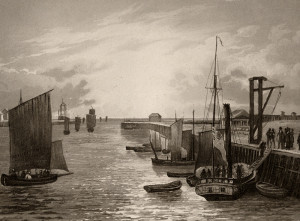
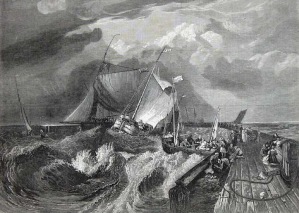
After a very unpleasant two-hour journey, we entered Boulogne. We were told that the first liner was leaving at half past six; it was half past five. There was no time to lose. We set off from where the omnibuses stop in the pouring rain. At the beginning of March (it was the 1er March) it wasn't daylight yet at half past five and we headed for the police station where we were given a permit to embark. The rain was lashing us in the face, the wind was closing the only umbrella the five of us had, it was very cold and everything contributed to stopping us in our tracks and making this journey very difficult. Mr Plichon gave me his big white burnous to wrap myself in; Henriette put on the tartan shawl that Mr A. Delahante had given us, and so guaranteed, we continued our walk. After six o'clock, we arrived at the office; our passports were checked and we were given our embarkation permit. Mr Plichon presented his passport, but was told that it was only for the interior and that he could not be given a permit. This upset us greatly, as Mr Plichon absolutely wanted to come with us as far as London. So what should we do? We got Tissot to give us a permit to embark, as his passport for England allowed it, and we left the office to go to the liner. On the way Mr Plichon and Tissot changed passports, Tissot not having to accompany us to England had no need of a permit to embark and we boarded the Malle liner which we were told would be leaving in a quarter of an hour. We settled in quite comfortably, hoping to fall asleep before the liner left. We were just starting to sleep when we were rudely awakened and told that the liner would not be leaving for another hour or two and that we had to hurry and get on another ship that would be passing by. We left in a hurry, accompanied by the Commissioner of the Republic, who was very unhappy about this change and complained a lot about having to run in this dreadful weather. The fact is that it was very bad. Our feet were wet and we weren't very happy with the change. We barely had time to get on the liner as it was leaving, when our two overnight bags were thrown over us and we went into the women's cabin, where we were completely seasick for three hours; the sea was very bad and for our first passage, it was a bit rough. Our poor friend Mlle Wisley was having veritable attacks of nerves, so much was she suffering, and the moans of the women around us only added to the unpleasantness of our own suffering. I was very ill, but I don't understand why people say that if you were to throw yourself over the bridge, they wouldn't object. I'm perfectly sure that I would have objected in all sorts of ways, and I used to find the strength to get up and look at what Mlle Wisley and Henriette. However, I suffered a lot and, when I got off the liner, I was very exhausted and very pale when I looked at myself in the little mirror in the cabin, probably to give the women the pleasure of finding themselves much uglier than usual. I saw myself very ugly and very changed, so I took the liberty, even in the midst of my fatigue, of making fun of Mr Plichon, who kept saying «Poor angels! I hoped and still hope that angels are much prettier than we were then.
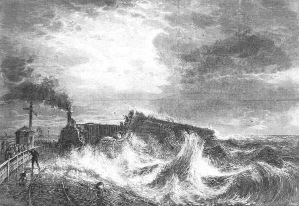
We are on our way to cab at Royal George's Hotel, We left our modest overnight bags, which certainly didn't contain any contraband, in the care of an extremely polite young customs clerk. Once at the hotel, we started to recover and we were able to wash up completely to our great satisfaction, as we were not very presentable after this trip. We had lunch, or rather the rest of the company had lunch without me; I was still too ill. We rested and at two o'clock we left the Royal George, I told the master our name, so that my father would know as soon as he arrived that we were in England. Still no news from him. God only knows what those days of anguish had been like! We left for London on the two-hour train. At Folkestone station we were greeted by a vigorous «hurra» from the master of the Royal George, who wanted to say goodbye.
We arrived at London Bridge, the railway landing stage. There we found a railway employee who told us that there was still no news of the King or my father and gave us the news. The master of the Royal George had said our name in Folkestone, so we were treated with all sorts of respect on the way. We take a cab and we're off to Bryanstone Square, to Mr. Broadwood's, to whom Mlle Wisley had written to ask him to reserve a flat for us. It was dark (seven o'clock) and we found the city immense, but very sad and dark. At Bryanstone Square we were told that Mr Broadwood was in Scotland. A great disappointment. We had counted on him. Mr Plichon told us about a small hotel he knew in Manchester Street. We went there and with great difficulty found a flat. It was as ugly and cold as could be. We were given a very English dinner, after which Mlle Wisley and Mr Plichon went out to take a letter to Mr Broadwood to tell William, who was due to arrive in Bryanstone Square, where we were. They came back at ten o'clock and found us both alone in this big sitting room, very sad and tired. Until then I had needed all my strength and I had not lacked it, but this evening I was more despondent than I can say. I felt completely isolated and abandoned, and the very sad flat we were in did nothing to revive me. We went to bed.
The next morning, 2 March, after breakfast, we saw Mr Tom Broadwood enter, who, having recognised his brother's handwriting as that of Mlle Wisley, came to see us. We told him we didn't know where to stay or what to do while we waited for my father. He replied with that perfect English simplicity: «But why don't you come and stay at Bryanstone Square? Mlle Wisley agreed and we told him that we would come and settle in during the day. It was a great rest to feel that we had a home to come to. home. We see M. de Rabaudy[26] and Lady Alice Peel[27], who do us good by their friendship. The day before, it had been eight years since M. de Rabaudy had seen my father arrive in London as ambassador; one could well say with truth «How times have changed! Around two o'clock, we left Ford's Hotel and went shopping in London. Mr Plichon bid us farewell and left to return home. During these days he has been our best and most devoted friend, and this at a time when proof of affection was so precious to us. We return to Bryanston Square: still nothing from my father.
The next day we saw a lot of people. Finally, at six o'clock in the evening, M. de Rabaudy arrived with the news of my father's arrival in Dover. We couldn't believe it. Mr de Rabaudy told us he was going to the railway to wait for the train. How I asked God to help us if this was a false hope. A little later came Mr Libri and Mr Panizzi[28] ; Both of us had just seen the paper and hoped it was true. We hardly dared to believe it, and yet the heart is so willing to believe what it hopes for! We sat down to dinner, all listening for the slightest noise. At seven o'clock, a car stopped in front of the door; my first reaction was to stand up and say «it's him». Mlle Wisley and Henriette wouldn't let me look. Footsteps are heard in the anteroom. The door was opened. It was definitely him. My God, you alone know what happened in our hearts during that moment of happiness, the like of which there are very few in this life. I can't say anything about it; I can't describe the moment when we were in his arms; it's a memory that has entered too deeply into my soul for me to recount it. But, as my father said a moment later, «there are great compensations in life, the greatest joys after the greatest pains». «My father, my father» we could only say over and over again as we looked at him. He was very pale and very tired; he had suffered so much! His journey had been, thank God, very easy. After leaving the Ministry of the Interior at around one o'clock on Thursday 24th, he was hidden by Mme Duchâtel.[29] at a porter's in the Rue Vanneau. In the evening, Mme de Mirbel[30] had come to get him and dressed him as a woman to take him to her house. There she hid him and looked after him with tireless friendship until Wednesday 1 January.er March, where he left with a friend who took him to Brussels on the Northern Railway as his valet. There my father was out of danger and at Ostend he took the steamer to Dover. He was not recognised en route, even though he waited an hour and a quarter at the Gare du Chemin de Fer du Nord in Paris, as the train that was due to leave at seven o'clock did not leave until quarter past eight. I cannot think of those sad days without crying out from the bottom of my heart with the psalmist: «My soul, bless the Lord and do not forget a single one of his benefits».
My father arrived on Friday 3 March, at seven o'clock in the evening. On Saturday 4th, at half past six, we were having dinner when our brother arrived, and we weren't expecting him at all. Dear Guillaume! All that was missing from our joy was our mother. But to see her again, we had to wait another fortnight. It was on Thursday 17th that she came to London with Mlle of Chabaud. She had endured the journey perfectly and was not very tired. What a joy it was to see her again, and how good of God to allow us to see her before taking her back to Him. Her first words as she embraced my father were «Now I can die in peace».
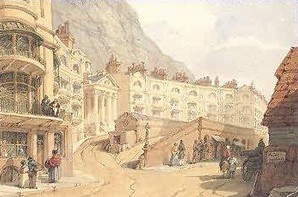
We had rented a small house and on Saturday 19th we moved to Brompton where we still are. That day we were sad to part company with Mlle Wisley whom we love so much and who has been so devoted to us in times of trial as well as in times of prosperity. There have been many sacrifices during these weeks and I don't want to count all the regrets. The first week we spent here was very quiet; our good mother was well enough and although she was a little lonely in this foreign country, she seemed happy in our midst. However, at the end of the week, she began to feel tired and to cough; her cold worried us a little. But by Thursday, she was much better and we felt very reassured. On Tuesday morning, as she was getting dressed, she said to Henriette: «Hurry up and get dressed, I'm tired, I want to sit down». She went downstairs to the living room. Henriette and I were getting dressed when Mlle de Chabaud came to call us, because she was very shivery and in a lot of pain. We try to warm her up. The day passed. At five o'clock Dr Holland, whom my father had sent for, arrived. He thinks it's not very serious, but says he can't vouch for anything. During the night Mlle de Chabaud and Henriette looked after Granny. She was rather better. Dr. Holland came on Wednesday around noon. He ordered a few little remedies during the day. Bonne-maman, who had taken our room, got up a little and stretched out on the sofa. She was no worse for wear. During the night of Wednesday to Thursday, she suffered quite a lot of stomach pains and tightness. We were very worried; she was agitated and, although very patient, was nowhere to be found.
Miss Hallam[31] picks me up for a walk on Thursday at two o'clock and we go to see Mrs Austin[32] ; She returns with us to Brompton, always so kind and devoted. At four o'clock Dr Holland came. He found our mother worse and even told Mrs Austin that there was no hope. So much anguish and sorrow had consumed the little physical strength left in this woman who was so sorely tried. It was like a lamp slowly going out. Thursday night was very difficult. My father and Mlle de Chabaud took it in turns to stay up. Bonne-maman suffered from a very painful restlessness. During the night, Mlle de Chabaud would repeat to her over and over again some passage from the Bible; she would read psalms to her, including psalm CXXI. Our mother found strength and submission in this, and said to Mlle de Chabaud: «I'm going away very happy; I know whom I have believed in. On Friday, life passed quickly; but she suffered very little and nothing, nothing in the world can convey the expression of joy and peace on her face. She still saw us at two o'clock; she often called for Guillaume; in life, as at the moment of death, he was her great preoccupation. Right up to the last moment, she retained all her faculties, but at four o'clock she could no longer see and could hardly hear.lle de Chabaud came to her bed and said: «Dear friend, you recognise me, don't you? The Lord Jesus is with you». She half-opened her dying eyes and her gaze said more than any words could. There was an unspeakable confidence and happiness in that farewell look; it seemed as if she was already seeing the Saviour who was holding out his arms to her. At half past seven she fell asleep in the Lord's arms, and her last breath was so sweet and peaceful that we, who were kneeling beside her bed in silence and meditating in the presence of the angels of God who had come to take the soul of our blessed mother to Heaven, did not hear it. Henriette, who was holding her hand, was the only one able to catch her last breath, which was neither painful nor distressing. The Spirit of God was in our midst, in that room of death, and however great the trial, however painful the separation, we could say from the bottom of our hearts: «Blessed are the dead who die to the Lord. Yes, says the Spirit, for they rest from their labours and their works follow them».
- Amable Voïart, born in 1798, became Mme Tastu in 1816, a woman of letters whose first collection of poems, with a romantic sensibility, was published with great success in 1826. FG took her under his protection when she was living in poverty. In 1840, she was awarded first prize by the Académie française, which had entered a competition for the eulogy of Mme de Sévigné.↵
- The Lenormants were close friends of FG. Amélie Cyvoct, wife of Charles Lenormant, was brought up by her aunt, Juliette Récamier. Her husband was curator of the royal library. They had three children: Juliette, Paule and François.↵
- The Banquet Campaign was a series of around 70 meetings organised throughout France between 1847 and 1848 by reformers to call for the electorate to be enlarged and to oppose the decisions taken by François Guizot's conservative government. The banning of one of these meetings, which was due to take place in Paris on 14 January 1848, led to the February 1848 revolution that brought down the July Monarchy and to the departure of King Louis-Philippe.↵
- English governess to Pauline and Henriette.↵
- The Ministry of Foreign Affairs was located at 9 bd des Capucines.↵
- Auguste Génie, born in 1794, lawyer from Toulouse, Secretary General of the Haute-Garonne, then head of FG's cabinet, Minister of Public Instruction from 1832 and since then his confidant, Maître des Requêtes at the Conseil d'État.↵
- Fanny Guyot was the second wife of pastor Jean-Henri Grandpierre, born in 1799, originally from Neuchâtel, an active member of the evangelical movement and pastor of the Batignolles Reformed Church.↵
- Jean Victor Coste, born in 1807, doctor specialising in embryology, holder of the chair of comparative anatomy at the Natural History Museum since 1837, professor of embryology at the Collège de France since 1844.↵
- Joachim Meurand was a classmate of François, FG's eldest son, who died in 1837. He remained associated with the Guizots throughout his life.↵
- Maurice de Vaines, his mother Eliza's half-brother.↵
- Born in 1813, Edmond Herbet, Guizot's private secretary at the London embassy in 1840, has been deputy director of commercial affairs at the Ministry of Foreign Affairs since 1845.↵
- Count Louis de Carné, born in 1804, entered the diplomatic service in 1825. He was deputy for Finistère from 1839 to 1848. A liberal Catholic, he was politically close to Molé but rallied to the FG in 1847. Revue des Deux Mondes and Correspondent, which he helped to found.↵
- Léonce Guilhard de Lavergne, born in 1809, new member of parliament for the Gers, deputy director and head of the America and India desk at the Ministry of Foreign Affairs.↵
- Camille Rousset, born in 1821, a substitute history teacher at the Collège de Bourbon, was a tutor for Guizot's children.↵
- Guillaume Libri, of Italian origin, collaborated with FG at the Ministry of Public Instruction, was a professor of mathematics at the Collège de France, a member of the Académie des Sciences and a general inspector of libraries. He was soon convicted of stealing rare books.↵
- René Amédée Hamon, born in 1814, auditor of 1re class at the Conseil d'Etat in 1846, was seconded in 1847 to the cabinet of the Minister of Foreign Affairs Guizot.↵
- Charles-Ignace Plichon, 1814-1888. Initially a Saint-Simonian lawyer, in 1841 he was entrusted by FG with a mission to the Orient, then elected deputy for the Nord region in 1846, where he had important business dealings, and mayor of Arras.↵
- Born in 1813, Louis Béhier, a classmate of François fils, was the Guizot family doctor.↵
- John Lemoinne was born in London in 1815 of French parents, and in 1840 entered the Journal des débats, where he is editor-in-chief in charge of domestic policy.↵
- François Lenormant, born in 1837, son of Mr and Mrs Lenormant.↵
- Cornélis de Witt, born in 1829, a school friend of Guillaume's, married Pauline in 1850.↵
- Rosine de Chabaud-Latour, born on 15 September 1794 in Nîmes, was very close to Madame Guizot and assisted her in her educational duties with Henriette, Pauline and Guillaume. During the Terror, her father, Antoine de Chabaud-Latour, had been hidden with André Guizot in the Bonicel house. They both escaped, but André Guizot was arrested and guillotined.↵
- Aged 33 in 1848, Adrien Delahante (son) had set up a bank in Paris and acquired shares in the Compagnie des chemins de fer du Nord. Attractive, he lived as a sought-after bachelor (including the tragic actress Rachel). His father, also named Adrien, Receiver General of Finances for the Rhône, had lent money to Louis-Philippe and was a friend of the Lamartines.↵
- Théobald-Émile Arcambal Piscastory, 1800-1870, Member of Parliament for Indre-et-Loire since 1832, diplomat, friend of Guizot.↵
- Lutheran Church of the Redemption.↵
- M. de Rabaudy was the Chancellor, or Secretary General, of the French Embassy in London. He was already in post when Guizot became ambassador. After the revolution of 1848, he seems to have been put on leave. In July 1849, Henry Reeve lobbied Tocqueville, the Minister of Foreign Affairs, to have him reinstated in the civil service.↵
- Alice Kennedy, daughter of the twelfth Earl of Cassilis, born in 1805, is the wife of John Peel, younger brother of the former Prime Minister. She had a long-standing relationship with Dorothée de Lieven and thus with FG.↵
- Anthony Panizzi, born in 1787 near Modena, was a former carbonaro who moved to England in 1822. He joined the British Museum in 1831, where he was director of the library. He also played a political role.↵
- Eglé Paulé, daughter of the first-born daughter of General Jacqueminot, who became Mme Duchâtel in 1839.↵
- Aimée de Mirbel, born in 1796, a highly talented miniaturist and wife of the illustrious botanist Charles François de Mirbel.↵
- Julia Hallam was the daughter of Henry Hallam, a liberal English historian whose Constitutional History of England FG had published in 1828 and who had become a very close friend of FG during the 1840 embassy and especially during his exile in 1848-1849.↵
- Sarah Taylor, 1793-1867, wife of John Austin, famous translator. She lived in France from 1843 to 1848.↵