 One might think that François Guizot was familiar with England from a very early age, where most distinguished young people under the Restoration made a voyage of initiation. However, he knew England for a long time without having seen it, publishing in particular, in 1826-1827, the first two volumes of his History of the English Revolution without ever having set foot there. It was not until the end of February 1840, At the age of 52, Guizot crossed the Channel, appointed by the Soult cabinet to represent France in London. The new ambassador, without his family, arrived preceded by the flattering reputation that his work on England had earned him. His person was immediately appreciated, «so distinguished and agreeable are his manners», wrote Lady Palmerston, wife of the Foreign Office Secretary. At the French residence at Hertford House, he gave the requisite diplomatic receptions and dinners. The young Queen Victoria and the middle-aged ambassador exchanged graces.
 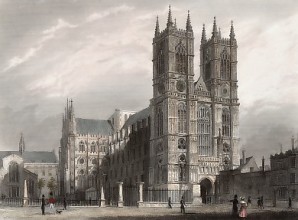 One night in June, he surprised her in her undress in a room at Windsor Castle. He discovered Westminster with the great historian Macaulay, visited Eton College and its boat races on the Thames, attended the solemn service at St Paul's Cathedral with the Bishop of London, spoke in French to the Royal Academy of Fine Arts with «the immense success that follows M. Guizot everywhere in London», and in English to the Lord Mayor. Guizot in London«, and in English to the Lord Mayor, took part with Prince Albert in a meeting against the slave trade »with great applause for my name and my person«, and even ventured to play at the races at Epsom. Finally, he made friends with representatives of the English aristocracy, who exerted a powerful seduction on him. When he left at the end of October, Lady Palmerston wrote: "We are deeply sorry to lose him. Everything about him reveals a gentleman, in the deepest sense of the word». These eight months of embassy provided him with the material for one of the most endearing chapters of his Memoirs.
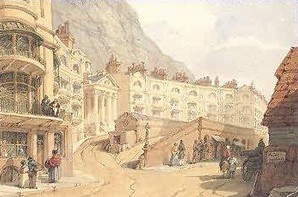 It was in very different circumstances that Guizot returned to London at the beginning of March 1848. He was then an exile. Welcomed on landing by his close friend Mrs Sarah Austin, he took up residence first in Bryanston Square, where he was reunited with his children, and then in Brompton, then on the outskirts of London, at 21 Pelham Crescent,
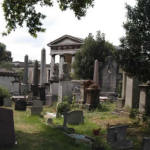
  where his mother joined him and died on 31 March. She was buried in Kensal Green Cemetery, where her grave still stands. Guizot was soon back in the company he had left in 1840: Macaulay, Henry Hallam, Henry Reeve, Lord Holland, and above all his dear friend Lord Aberdeen. Charles Greville, Secretary to the Queen's Privy Council, described him as follows: «He goes everywhere, is very much in train, and puts on a good show; everyone is very polite to him, and he appreciates the kindness of this welcome.»
  It was in Brompton that he wrote two important works, Democracy in France, a vigorous political essay, and Why did the English Revolution succeed?, a historical study not unrelated to current events. Oxford University, where he was triumphantly received, unsuccessfully offered him a professorship.
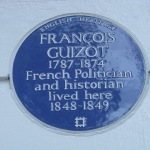
After returning to France in July 1849, Guizot returned to England on several occasions, visiting the Universal Exhibition in London's Crystal Palace in 1851. Each time, he confirmed his attachment to British society, which had earned him the nickname «Lord Guizot» during the first Entente Cordiale. A few months before his death, he wrote: «I also live in England. It's a lot to have two lives and almost two homelands. A commemorative plaque was recently affixed to his house of exile.