Article written by Jean Bergeret (2020)
Historical background
«It was neither economic factors nor the resistance of the slaves themselves that brought about the definitive abolition of slavery in France. of the slaves themselves that led to the definitive abolition of slavery in the former former French colonies, but the development during the July Monarchy of an abolitionist July monarchy of an abolitionist culture which achieved its aims as soon as the Revolution of 1848 overthrew the Orleanist regime.
Cautious and gradualist during the 1830s, the French abolitionist abolitionist movement began to turn to immediatism in the 1840s, when it became clear that the government would only allow a very distant emancipation, and finally freed the 250,000 slaves in the French colonies after the French colonies after the revolution had swept away the monarchy.»
Text taken from :
Jennings Lawrence C. The second movement for the abolition of French colonial slavery. In: Overseas, Volume 89, no. 336-337, 2nd semester 2002. slave trade and slavery: old problems, new perspectives perspectives ? pp. 177-191.
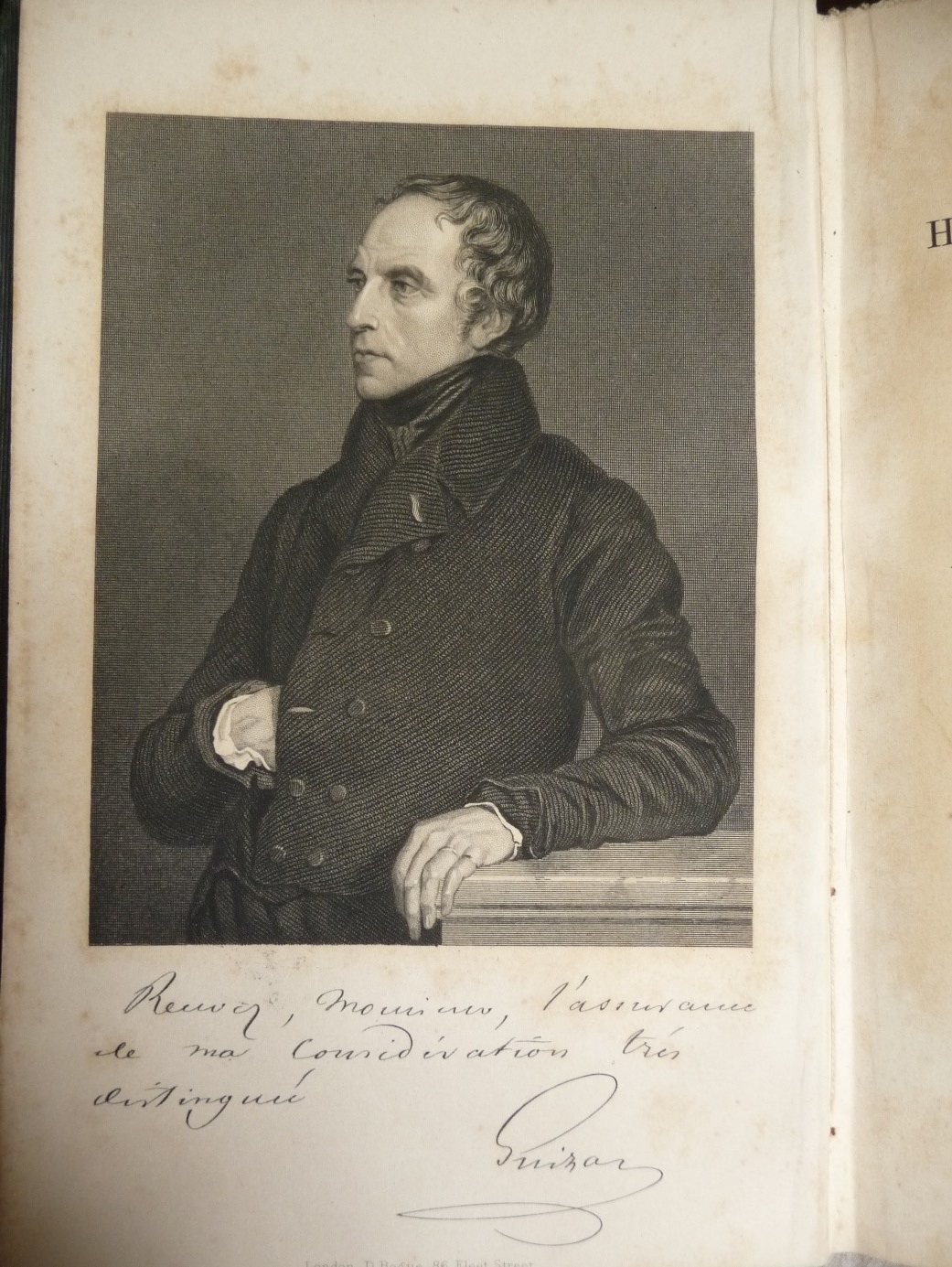
Illustration taken from Guizot, The history of Civilization, vol. 1, London, 1846
«Before the Revolution broke out in France, both England and France were involved in the slave trade. In At the beginning of the 19th century, England, which had become abolitionist, abolished the slave trade, in 1807, then slavery in 1833. In France, attitudes changed less quickly. slavery had been abolished by the Convention in 1794, Bonaparte reinstated it in France. Bonaparte reinstated it in 1802, as well as the slave trade, by implication. Louis XVIII banned the slave trade in 1818 but remained in favour of progressive measures. French shipowners continued the slave trade. Several abolitionist laws were needed to discourage this illegal trade. illegal trade.
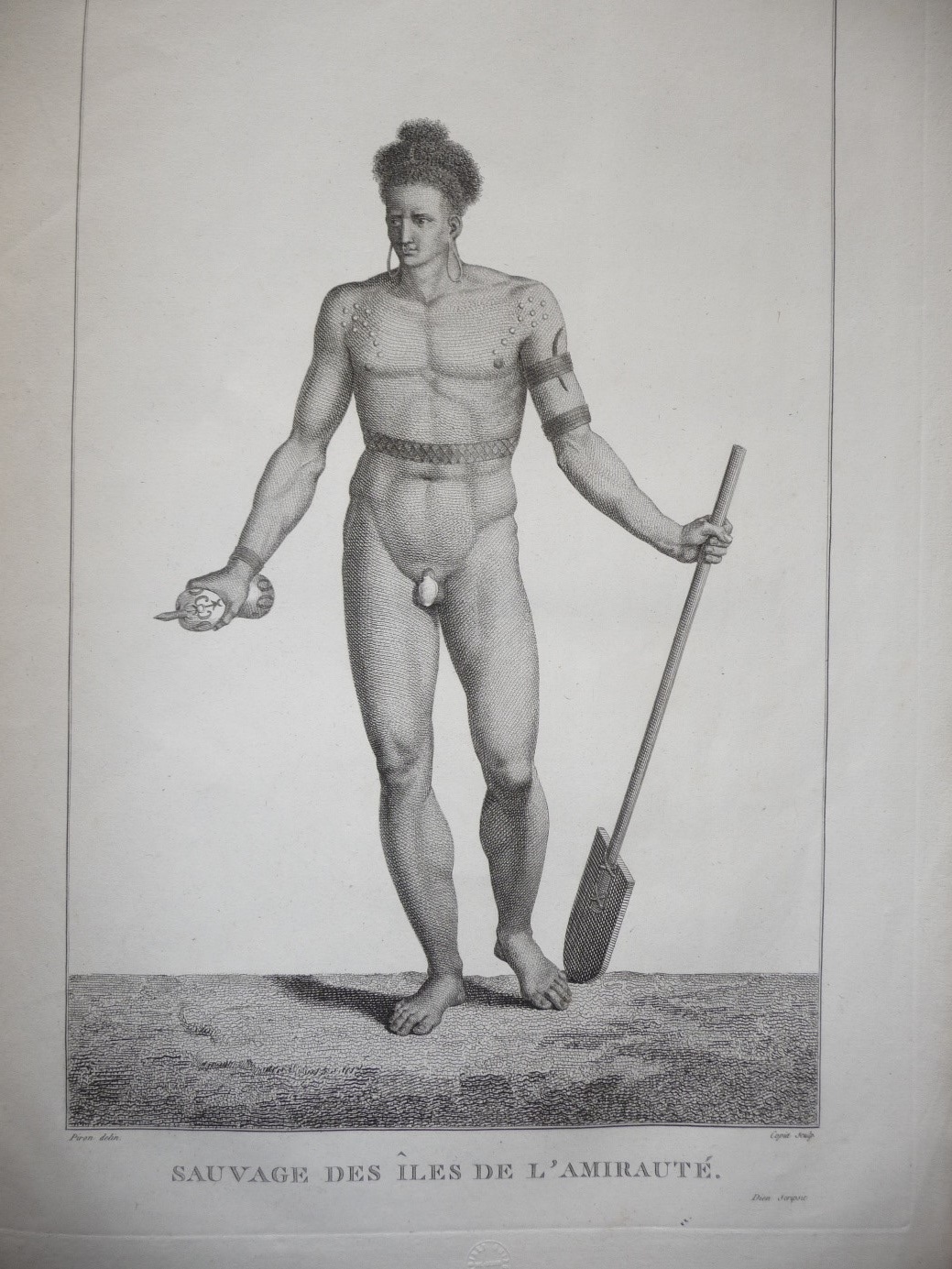
Commandant Labillardière, Atlas to serve as a report of the voyage in search of La Pérouse, Paris, Year VIII of the Republic.
The legend gives a rather negative perception of a man from the Admiralty Islands
England, champion of the abolition of the slave trade, took international action to purge the coast of Africa of slave traders. It signed conventions with various countries and used the right of visit to force ships to respect them. France also gradually organised surveillance of the African coast by its navy.
Shortly after the accession of Louis-Philippe, a bilateral agreement was signed with England to coordinate surveillance of the coast of Africa by exercising reciprocal visiting rights (1831 and 1833). France was the only country to use its navy to crack down on the slave trade. British ships were deployed from Sierra Leone to control the slave trade centres in Benin and the Gulf of Guinea. French ships were based in Saint-Louis du Sénégal and Gorée. Joint commissions were set up to try, without appeal, the slave traders seized by the repressive cruisers. This concerted action led to a significant decline in the slave trade from 1840 onwards.
But Louis-Philippe's France, which had not yet abolished slavery, was above all concerned not to appear to be following in England's footsteps. A «visiting rights crisis» soon shook political life. National pride was aroused by a power struggle between Adolphe Thiers, who had been removed from the Foreign Office because of his adventurous policy against England, and François Guizot, his replacement at the Ministry. When Guizot tried to update the convention with England in December 1841, months of parliamentary debate and numerous articles in the press, orchestrated by Thiers, prevented its ratification.
The visit of French ships by the English navy gave rise to a visceral antagonism against England in France, reinforced by various high-profile cases, such as the seizure by the English in 1839 of Senegambia, which transported not captives but workers hired for Cayenne.
In reality, the two navies no longer seized black captives from French ships because the French slave trade no longer existed. The right of visit that inflamed French public opinion was no longer relevant in 1844. The trade had taken more complex routes, under other flags».»
Text by Luce-Marie Albigès, April 2007. History website par l'image.
In France
A Society for the Abolition of Slavery was created in 1834. It was dissolved in 1848 when slavery was abolished in France. The founding members were friends of Guizot: Victor de Broglie, Charles de Rémusat, Agénor de Gasparin, etc. Guizot was not one of them, nor, it would seem, did he belong to the associate members.
But on 13 February 1838, the Chamber of Deputies, after many unsuccessful numerous unsuccessful attempts by the abolitionists, discussed a new a new proposal and Guizot was appointed chairman of the committee responsible for to examine it.
Charles de Rémusat presented the commission's report to the Chamber of Deputies on 18 June 1838. But instead of abolition solely for the benefit of for unborn children, which would lead to slow abolition and «envious rivalries would lead to "envious rivalries, after recalling that there were that there were 258,956 slaves in the French colonies, indicated that it wanted mass emancipation, but proposed to wait until 1840 to fully judge the British the British experience and indicated that in the meantime it was advisable to that in the meantime measures should be taken to prepare for emancipation (pecuniary support, redemption, religious education).
The King dissolved the Chamber in 1839. The bill did not succeed.
First international congress in favour of the abolition of slavery
The convention was attended by François-André Isambert, a member of the French Society for the Abolition of Slavery:
«When Mr Isambert entered the room, accompanied by Mr Dussailly and Mr Hauré Mr. Dussailly and Mr. Hauré, members of the French Society, he came to take his place on the right of the chair reserved for the president. took his place on the right of the chair reserved for the president. The French delegation The French delegation was greeted with great acclaim. The same happened when the the entrance of the French ambassador, M. Guizot. Next to the French deputies was M. Guizot.me the Duchess of Sutherland, HRH the Duke of Sussex and Mr. O'Connel. O'Connel were greeted with thunderous applause.»
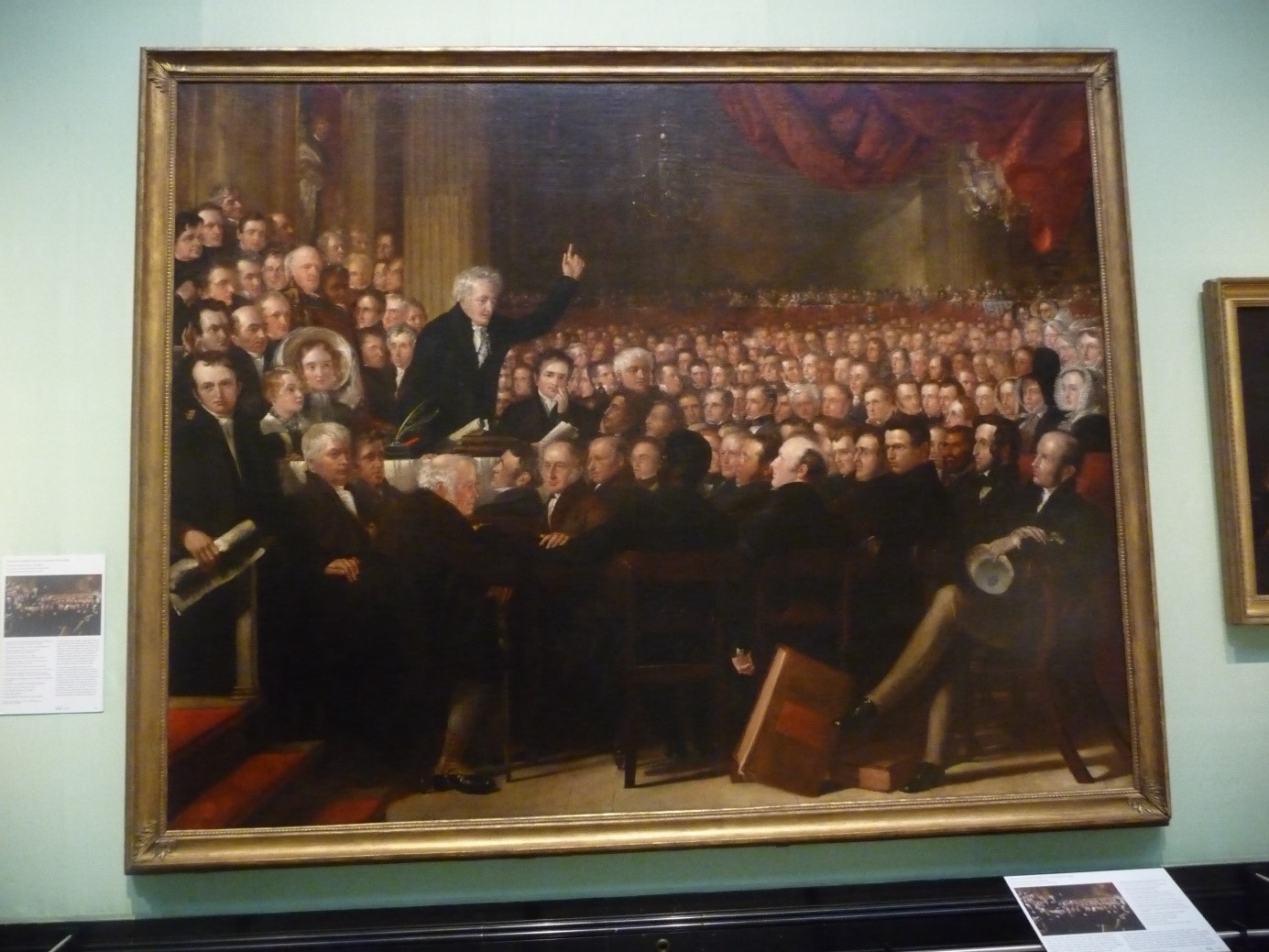
Haydon Benjamin Robert (1786-1846), The anti-slavery society Convention, 1840.
Oil on canvas, coll. National Gallery, London
The July Monarchy dithered over the abolition of slavery, despite slavery, despite repeated calls from French society. It was promulgated by a provisional government made up of eleven people, five of whom five of whom were members of the French Society for the Abolition of Slavery slavery: François Arago, Adolphe Crémieux, Alphonse de Lamartine, Louis Blanc and Alexandre Ledru-Rollin.
Guizot's role
Guizot was against slavery.
«Guizot was a member of the Society of Christian Morals, This «society, to which Protestants belong in large numbers and to which the flower of the liberal opposition belongs, [has] a philosophical and political vocation. the flower of the liberal opposition [has] a philosophical and philanthropic vocation philanthropic vocation, leading the fight against the death penalty in political matters and the slave trade, for the improvement of prison conditions and conditions in prisons and for the emancipation of the Greeks - all convictions to which Guizot will always remain attached ... Guizot's main contribution seems to have been to Guizot's main contribution seems to have been his sustained efforts, when he was ambassador to Britain, to get an international treaty signed authorising the boarding the boarding of ships belonging to participating nations in order to check that that they were not carrying human cargo.
During debates in the Chamber of Deputies in 1841, Guizot strongly the treaty to be signed between S. M. the King of the French and S. M. the Queen of the United Kingdom of Great Britain and Ireland, the two countries undertaking to continue to prohibit ... any trade in blacks in the colonies they own.
His talents as a negotiator and orator prepared the ground for the definitive abolition of slavery in the French colonies in 1848, for which Schœlcher deserves the greatest credit. The hope of François Guizot that his name would be associated with all those who fought for the the abolition of slavery and the slave trade has so far been disappointed.»
Text taken from the guizot.com website
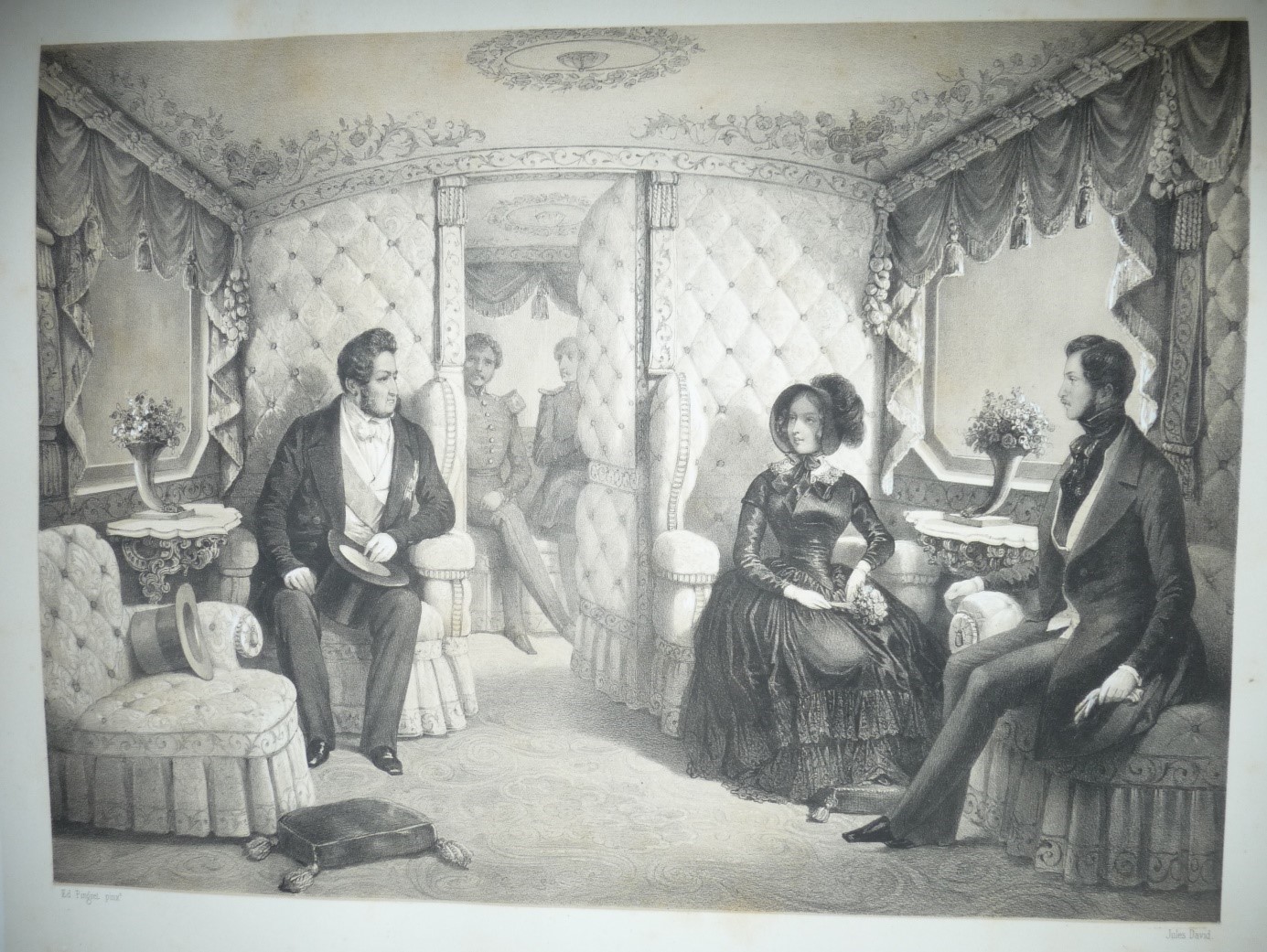
Pingret, Visit by His Majesty Louis-Philippe I to Windsor Castle. Paris, London, 1846
Coll. Val-Richer.
Louis-Philippe, Queen Victoria and Prince Albert in a carriage of the royal train.