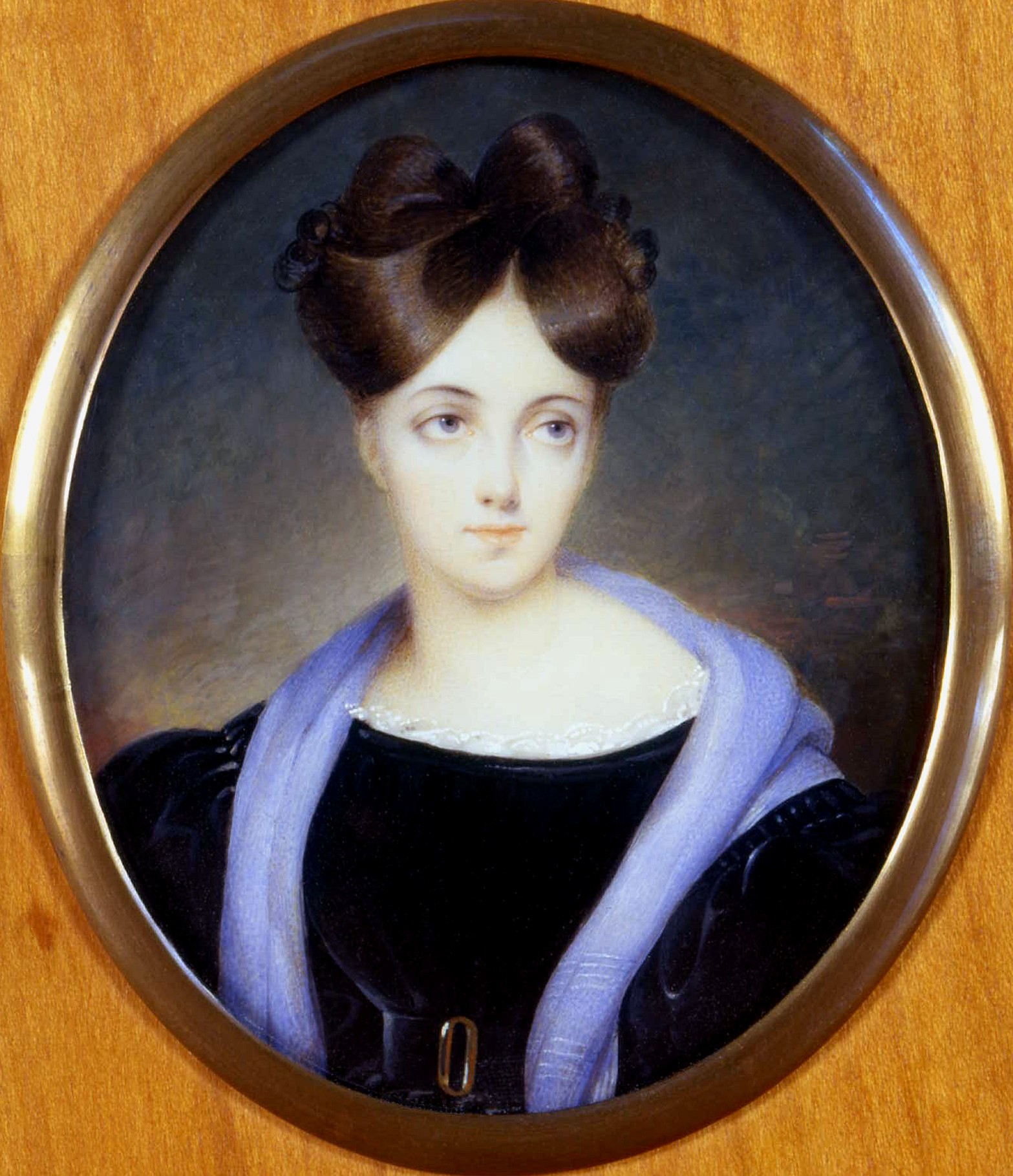
 When, on 8 November 1828, Eliza Marguerite Andrée Dillon married François Guizot at the Temple de l'Oratoire and then at the Madeleine church, the least we can say is that she was not entering into an unknown world. Born in 1804, the child was not yet eight years old when her husband became her uncle by marriage by marrying her aunt Pauline de Meulan. And this uncle was all the closer to her because she herself had lost her father in 1807. Eliza was the eldest daughter of Henriette de Meulan, two years younger than her sister Pauline, and Jacques de la Croix Dillon, of Irish descent, a hydraulic engineer who taught at the École Centrale and won fame for building the Pont des Arts in Paris. Henriette Dillon remarried in 1814 to the prefect Jean-Marie Devaines, whose family had been closely linked to the Meulans since the end of the Ancien Régime. They had a son in 1815, Maurice, an exact contemporary of the young François Guizot. If we add that Eliza had a younger sister, also called Pauline, with whom she was as closely related as her mother was to her own sister, and that all these people lived more or less together, we will understand that Guizot, widowed in August 1827, did not have to look far for his second wife.
In the spirit of the eighteenth century that inhabited the Meulans, Eliza and her sister Pauline, who in 1831 would become Mme Decourt, had received an excellent moral, intellectual and artistic education, from which the elder, more gifted, had made the most of. She had to put this into practice as early as 1823, when, on the death of her mother, she took over the household of her stepfather Devaines and her half-brother Maurice, in the same house as the Guizots, in the rue Saint-Dominique. At the time, she had a strong crush on Charles de Rémusat. , On the contrary, in his Memoirs, he left a long and rather contrasting portrait of her at that time: «Her family admired her greatly, and they beat their breasts to find her pretty. What she really was was admirably gifted at learning. Her facility, her memory, her quick thinking, her aptitude for work was remarkable. In the rue Saint-Dominique, she was a sort of attraction for the young people who frequented Guizot, and a seduction for the not so young, like the scholar Claude Fauriel, who looked at her tenderly. When her aunt fell ill and died, Eliza became the real mistress of the house, and remained so after her aunt's death, while having to deal with the tough Madame Guizot mother. In addition, she did more than help her uncle in the preparation of his lectures at the Sorbonne, which he resumed in April 1828, and in the writing of the French magazine, created by Guizot in January of the same year, where, as a great reader herself, she was particularly involved in book reviews.
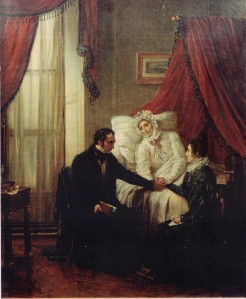 «Eliza was a young Pauline,» wrote Guizot. Although it is improbable that Pauline de Meulan symbolically placed Eliza's hand in Guizot's on her deathbed, nine months later Guizot realised that the young woman he had known for so long had everything to please him. Passion flared on both sides, and was consummated on 23 June 1828. The marriage followed in November, bringing Guizot some money, in particular the house in the rue de La Ville-L'Évêque that became their home. He was happy, even more so than Rémusat describes: «She was even-tempered, she loved him, she was proud of him; and he, for his part, loved her with a kind of fatuity that could make you smile, but which was allied to genuine affection». This happiness, expressed as always in Guizot's lively correspondence, corresponded to his years of greatest success: figurehead of the opposition at the end of the reign of Charles X, deputy for Calvados, major player in the Revolution of 1830, minister, all in five years. Eliza enjoyed these successes and shared every moment of them, making herself available to everyone, first and foremost to her daughters, Henriette and Pauline, born in 1829 and 1831, but also to the friends and relations of her husband, who was now very much in the limelight.
 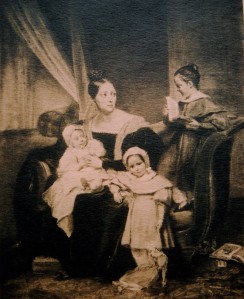 She did good around her, and was very involved in charitable work, particularly during the cholera epidemic of 1832. The son she was expecting, Guillaume, was born on 11 January 1833, before the tender eyes of her half-brother François and Madame Guizot mère. Six weeks later, stricken with puerperal fever, Eliza began to lose her mind, which had been so strong and full, and died on the night of 11 March. «On Tuesday 12th, I buried her myself in her shroud. On Wednesday 13th, at 3 o'clock, I laid her in her coffin and arranged her. No one saw her after me. Was Guizot consoled by Pauline's death? In any case, he was not consoled by Eliza's death. She was young, intelligent and kind, he believed her to be beautiful, he had lost everything.
On 19 June, the Prefect of Deux-Sèvres sent Guizot a poem in memory of Eliza, written by the eighteen-year-old Élise Moreau:
«God of goodness, why do you call down from the earth
The one that promised so many days of happiness
To the tender husband, the happy father
Whose heart his death broke?»