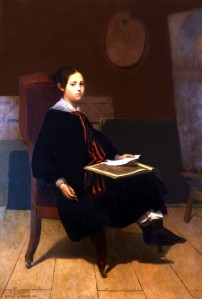
 «My two daughters are very close,» wrote Guizot in 1838. «They have everything in common. Henriette and Pauline, first names taken from the sisters of Meulan, were then nine and seven years old.
Forty years later, Henriette wrote to her two daughters Marguerite and Jeanne: «Will you ever love each other as my Pauline and I loved each other? There was hardly a day when they didn't talk to each other, either in person or by letter. The pair of orphans, brought up together and with great care by the same people, principally Mme Guizot mother and her more educated young friend, Rosine Chabaud-Latour, grew up in the same surroundings, sharing the same governess, the all-British Miss Wisley, 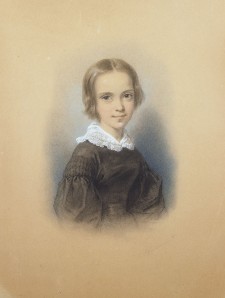 fleeing together to London in February 1848, In the eyes of the world and within their family, they were the inseparable Guizot girls. So it came as no surprise that, within two months of each other and through the office of the same vicar Grandpierre, they married the brothers Conrad and Cornélis de Witt in Paris in 1850, who were also a pair. They then brought up their children together during the long summers spent at Val-Richer, and any separation was a heartbreak for them. In February 1874, Pauline died, also with lung damage, in the arms of Henriette, who was the last to see her alive, and who from then on took charge of her sister's youngest children.
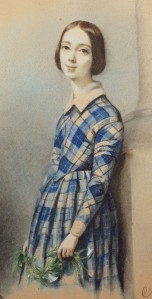 Yet they were very different, «the elder superior to the younger», wrote Guizot. In fact it was Henriette that he preferred, and it is also the best known, because of the importance of its correspondence and the abundance of her literary output, because she lived thirty-four years longer than Pauline and because it is her descendants who have kept the family memory alive. In her father's eyes, Henriette was the reincarnation of Eliza Dillon, including physically, and her attachment to her, expressed from the age of 9 - «I'll spend my whole life with you» - bordering on adoration, never wavered. On the other hand, Henriette very soon became indispensable to her father, as a housekeeper when he received guests at the ministry, as an assistant in his intellectual work, and as the administrator of Val-Richer, where she managed the logistics and kept the accounts. In addition to her robust intelligence,
 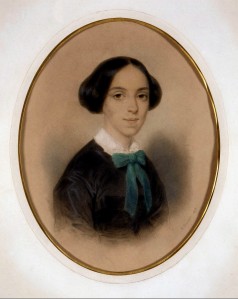 She thus acquired a spirit of seriousness that was not to be found in Pauline, who was more mischievous, a better musician and also in poorer health. Her closeness to Guizot increased still further, if that were possible, during the period of her exile in London, from March 1848 to July 1849, when she had the material and emotional responsibility for her father, her sister and her brother Guillaume. In a sense, she says, this was the happiest time of her life, and also the time when she strengthened her English tropism, acquiring full mastery of a language that, like Pauline and even Guillaume, she already knew, along with Italian and German.
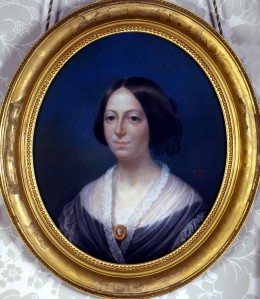 In Conrad de Witt, who was five years older than her, she found a companion who was certainly pious and distinguished, but not up to her standards. According to their grandson Jean Schlumberger, Pauline and Henriette should have swapped husbands. Born into an excellent Dutch family, their father had been naturalised French in 1806 and appointed sub-prefect of Amsterdam. Of the two orphans, Conrad was less gifted for intellectual pursuits than his four-year-old younger son Cornélis, preferring manual labour and outdoor exercise to the reading and writing his wife was so fond of. Guizot was delighted with his sons-in-law: «You and your brother,» he wrote to Cornélis, "have fulfilled my dreams and exceeded my ambitions. But it was his daughters' dreams that were at stake first! It seems that the union between Pauline and Cornélis, who had a successful career in finance and industry before being elected MP for Calvados in 1871 and member of the government in 1874-1875, was a happy one from start to finish, with seven children, the youngest of whom was named François. Henriette's marriage was marred at the outset by the loss of her baby daughter Elisa at the age of four months, which left a deep and lasting impression on her mother. Guizot offered the grieving parents the consolation of a stay of several months in Rome.
 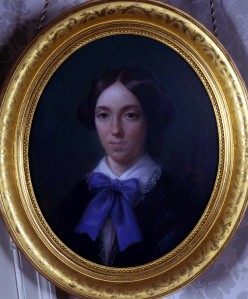 When Conrad, Henriette and their daughters Marguerite and Jeanne moved to Le Val-Richer in 1855, the atmosphere may have seemed a little oppressive for Henriette, who could not fully express herself to her silent husband, although there is no doubt that she always remained tenderly attached to him, and was heavily involved in his election to the Calvados General Council and then, in 1885, to parliament. While she was exhausting herself with her many jobs, he was trying to transform the estate into a model farm, and the technological innovations introduced at great expense soon gave rise to formidable financial problems, especially as Conrad was a natural spender. In the end, it was their sons-in-law Paul and Léon Schlumberger who saved the family from ruin.
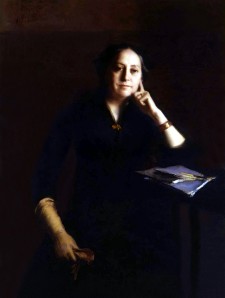
It was in order to meet financial needs that Henriette, in addition to her duties as her father's secretary, began producing literary works at a very early age. Alternating novels and moral tales with historical accounts, she published nearly a hundred works under the name Mme de Witt née Guizot between 1854 and 1904. In addition, she did many translations from English, sometimes with Pauline and Cornélis, particularly of Shakespeare and Dickens, and some text editions. She also found time and energy for charitable activities, opening an asylum for destitute children not far from Val-Richer, setting up a workhouse in a neighbouring commune, and founding the Oeuvre des détenues libérées in Paris in 1882 with friends, in line with Guizot, who had always been concerned about the condition of prisoners.
Above all, she dedicated herself to the memory of her father. After his death, she completed the’History of France as told to my grandchildren, She also began to classify archives and correspondence, and published two volumes which were for a long time the only direct evidence of Guizot's personality, Mr Guizot with his family and friends (1880), Letters from Mr Guizot to his family and friends (1884). Henriette's second daughter, Jeanne Schlumberger, for whom her grandfather had a special affection from a very early age, lived until 1944. She was the last member of the family to have known François Guizot.