The Metamorphoses of the City. An essay on the dynamics of the West
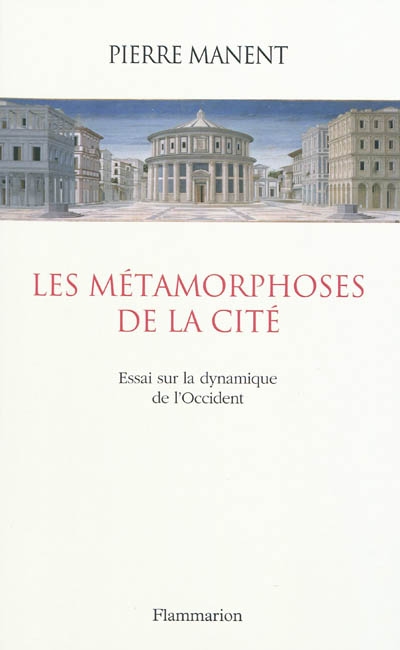
The purpose of this book is to present an interpretation of the history of the West, and more specifically a political interpretation of the permanent revolution that has characterised the West. My thesis is as follows: the city is the primary source of Western development. Before this invention, people lived according to the relatively immobile order of families, which is still prevalent in many parts of the world. With the advent of the city, humanity embarked on a new era of politics, understood as the government of the common good, and the history of the West became the history of its four major political forms: the city, then the empire, the Church and the nation. This succession is not only chronological, it is also causal. Each new form results from the previous one, which, reaching the end of its possibilities, gives rise to the new one. This is how the city, deploying its energies to the point of exhausting itself in internal struggles and external wars, gave birth to the Western empire - that of Alexander, then that of Rome. It was in this way that the Church as a universal community took over from the empire, which was incapable of preserving the unity it promised. For much of its history, the West remained unsure of its political form, hesitating between the city, the empire and the Church, until the political form that would allow Europeans to govern themselves rationally was developed: the nation. But this form in turn destroyed itself in the «hyperbolic» wars of the twentieth century, and today we are searching for a new political form. This study endeavours to trace the political, as well as the intellectual and religious, history of the West, linking it again and again to the political problem par excellence: how do we govern ourselves? This reasoned history of political forms is therefore also a study in political philosophy. Source: Flammarion
and The political view
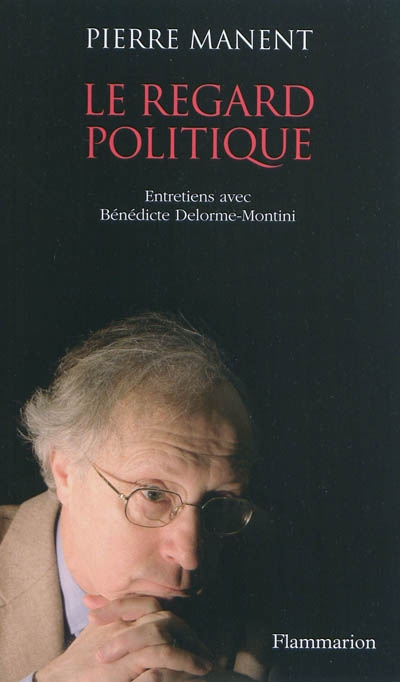
«These days, the human faculty that gets all the approval is imagination. But I have no imagination, I'm not an artist and I have no ambition to create. On the other hand, I would like to understand. Understand what? To understand what is. But understanding what is hardly motivates people today. Rousseau, the great master of the Moderns in this respect, said: «Only what is not is beautiful». Deep down, for me it's the opposite: I'm only interested in what is. And that's perhaps why, at least since I came of age, I've never been a leftist: the left prefers to imagine a society that isn't, and I've always found the society that is more interesting than the society that could be. For some thirty years, Pierre Manent has been carving out a niche in the French intellectual landscape that is as original as it is discreet. The aim of these interviews is to reconstruct the movement and the stages: the early passion for politics aroused by a Communist father; the discovery of the Catholic religion in Louis Jugnet's khâgne in Toulouse; entry to Normale Sup and the choice of political philosophy; the decisive meeting with Raymond Aron; the founding of the journal Commentaire... In this way, the characteristics of a personal approach come to light: the tireless reading of the great authors, the conviction that political science remains possible in the age of relativism, and finally a certain »political gaze« that makes the contemporary world intelligible. These interviews are a lively introduction to Pierre Manent's work, and in particular to Métamorphoses de la cité, published simultaneously. In short, the two books share the same ambition: »Our entire history, unfolding from our political nature, is what I would like to make visible and understandable. Source : Flammarion
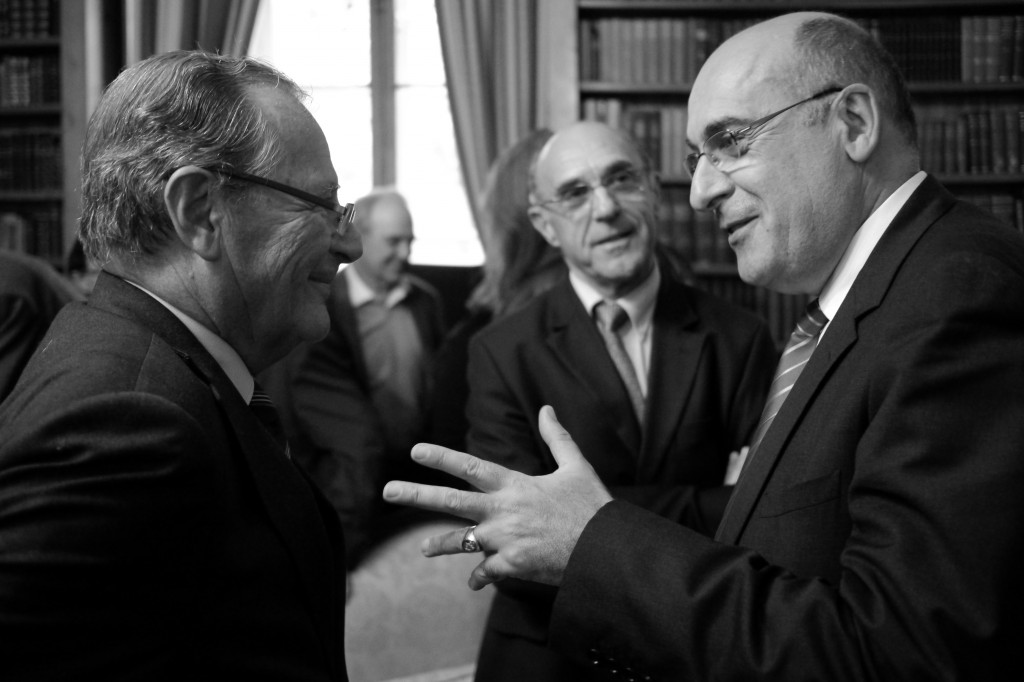
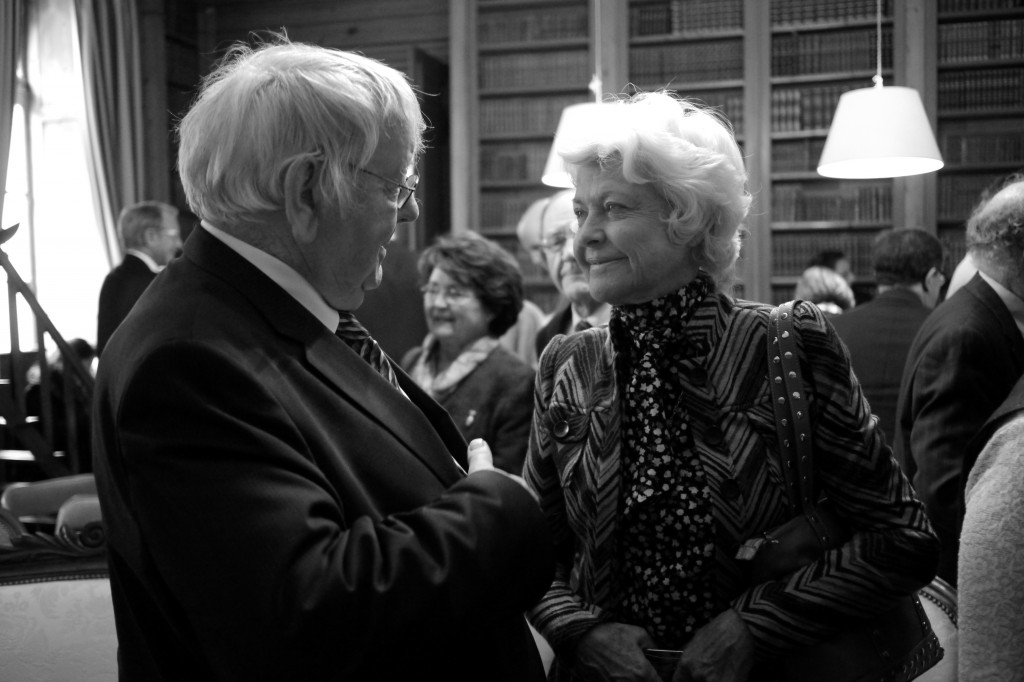

Members of the jury
Gabriel de Broglie
Chancellor of the Institut, Honorary Conseiller d'État. His works include a biography of Guizot published in 1990.
Jean-Claude Casanova, Chairman of the Jury
Member of the Institut (Académie des Sciences morales et politiques), director of the Revue Comment, Chairman of the Fondation nationale des sciences politiques.
Benedetta Craveri
Professor of French language and literature at the University of Suor Orsola Benincasa in Naples, member of the Board of Directors of the Benedetto Croce Foundation, specialist in the eighteenth century.e Benedetta Craveri is the author of several books, including The age of conversation published in France by Gallimard (2002), republished in the Tel collection and translated into several languages.
Olivier Dumoulin
Professor of contemporary history at the University of Caen. Author of several works on the social and intellectual history of historiographical practices in France in the nineteenth century.e and XXe centuries
Patrice Gueniffey
Director of studies at the Ecole des Hautes Etudes en Sciences Sociales, director of the Centre Raymond Aron, author of numerous publications including Number and reason. The French Revolution and elections, The Eighteenth Brumaire, (Gallimard) in 2008.
Claude Habib
Agrégée de Lettres modernes, professor at the University of Paris III, specialist in the literature of the eighteenth century.e century, Claude Habib has published several essays, including Le amorous consent (Studies) 2001, French gallantry (Gallimard) 2006.
Sudhir Hazareesingh
English historian, professor of political science at Oxford University (Balliol College), specialist in France, has written several works on the history of France in the 19th century.e century The legend of Napoleon which was awarded the Prix d'Histoire by the Fondation Napoléon in 2006, Saint-Napoléon (Tallandier) in 2008, The Gaullist myth, (Gallimard) 2010.
Georges de Ménil
Descendant of François Guizot, Professor of Economics at Princeton University (1970-1974), Director of Studies at the Ecole des Hautes Etudes en Sciences Sociales. Dual French and American national. Author of Common Sense. To unblock French society (2007).
Mona Ozouf
Director of research at the CNRS, Mona Ozouf has written numerous books, including Les Aveux du roman. The XIXe century between the Ancien Régime and the Revolution, for which she was awarded the Prix Guizot in 2002. She has published several works in collaboration with her husband, Jacques Ozouf, and later with François Furet. She writes for Nouvel Observateur and The Debate.
Dominique Pain
Representative of the Conseil Général du Calvados, where he is Director of Heritage.
Philippe Raynaud
Professor of philosophy and political science, professor of political philosophy at the University of Paris II, the EHESS and the Institut d'études politiques. Member of the Institut Universitaire de France, co-author and director of the Dictionary of political philosophy, author of Max Weber and the dilemmas of modern reason (P.U.F. 1996), and more recently of Three revolutions of freedom : England, United States, France (P.U.F. 2009).
Georges-Henri Soutou
Member of the Institut (Académie des Sciences Morales et Politiques), professor of contemporary history at the Université Paris IV and the Institut d'études politiques, specialist in international relations in the twentieth century.e century, he is the author of several books, including The Fifty Years' War (Fayard), 2001.
Laurent Theis
Agrégé d'histoire, secretary for debates at the Assemblée Nationale (1983-2004), honorary president of the Société de l'Histoire du Protestantisme Français, contributor to the cultural service of the Point, a literary consultant with Perrin, and the author of several works on the Middle Ages, in 2008 he published a biography of Guizot (Fayard).