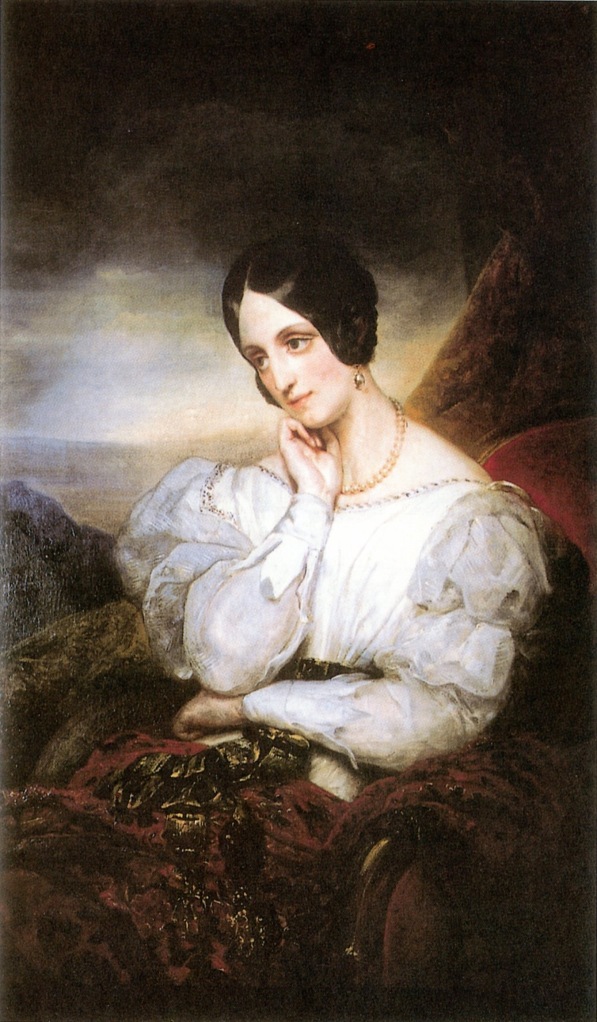
 Did Guizot have a penchant for the great European ladies? In any case, they felt attracted to him and were not afraid to let him know it. The Princess of Lieven had not yet been buried when Guizot received a letter from Berlin that he had not expected, or no longer expected: «It is you above all that I am thinking of (...) There are hidden and forgotten corners of the heart that are found when you come knocking». This explicit invitation was signed by the Duchess de Sagan. In March 1857, she was sixty-four years old, and had also spent half a century in the highest echelons of politics and society. Dorothée de Biron was the youngest of the four daughters of the last sovereign duke of Courlande, who had sold his rights to Catherine II at a very high price when Russia absorbed his principality. In 1809, she married Count Edmond de Périgord, nephew of Talleyrand, who asked Tsar Alexander 1 to marry her for him.er, which the Duchess of Courland knew particularly well. After moving to Paris, she became lady of the palace to Empress Marie-Louise. Her uncle, whose interest in the young woman of remarkable beauty and wit was growing, took her to the Congress of Vienna to run his household, which she did to perfection:
 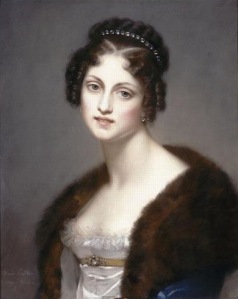 «She has that irresistible charm on her face and throughout her person, without which the most perfect beauty is powerless», enthused one delegate. She was now launched into the highest echelons of European society. It was in Vienna that she formed an extraordinary bond with Talleyrand, one that was at once emotional, intellectual and carnal, since her daughter Pauline, born in 1820 and future grandmother of Boni de Castellane, was certainly their joint creation, since Count Edmond had almost definitively left her, without ever divorcing her. In 1817, the Countess de Périgord was given the title of Duchess of Dino, by which she was henceforth known, before becoming Duchess of Talleyrand in 1838, then of Sagan, an immense Silesian estate, in 1844. Apart from the reigning dynasties, there was nothing more chic in the world than the Duchess of Dino, and hardly a more ardent temperament either, reflected in her immense and fascinating blue/black eyes. Guizot undoubtedly saw her for the first time in the summer of 1815, when
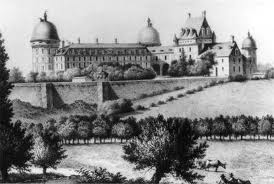
 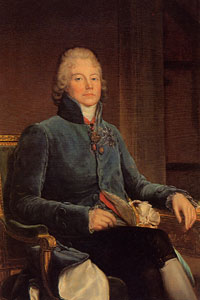 Talleyrand was President of the Council and he was Secretary General of the Ministry of Justice. They met again during the Restoration, Talleyrand, whose niece, staying at his hotel in the rue Saint-Florentin, espoused all his causes, moving towards the liberal opposition in which Guizot played a growing role. Dorothée de Dino made advances to him, as she did to many others. When he became a widower in 1827, she stepped up the pressure, inviting him to her home, even wanting to have him alone in September 1828 at the Château de Valençay when he was due to remarry two months later. His future wife, Eliza Dillon, managed to oppose him. They never lost sight of each other, however, particularly after Guizot's second widowhood in 1833.
 . What happened between them when, in 1834, she returned with Talleyrand from London, where she had performed with brio the unofficial role of ambassador? Guizot, in May 1836, mentions a «long and long-awaited conversation» between them. It was at her home that he first met Dorothée de Lieven, whom the other Dorothée had known well in London and had befriended in Paris in 1835. This friendship soon turned into a jealous rivalry in which Guizot was the object. «M. Guizot can be found morning and evening at Mme de Lieven's, and is amused by it», wrote the duchess; «Do you know that I have complete contempt for Mme de Talleyrand? She urges me to go to her house, which I will not do», replied the princess. But the Duchess de Dino, who had long been a committed spectator of French politics and very close to the d'Orléans family, was living more and more in Prussia, and opportunities to meet were becoming increasingly rare. They resumed in 1857, and it didn't take long for the old friends, grandparents for years, to renew their acquaintance: «Still beautiful, still with the look and charms of Circe. And her mind as whole, as lively as her body». From 1857 to 1860, when they were both in Paris, Guizot came to see her several times a week, and dined with her, often alone, at the home of their mutual friend the blind Countess Mollien; in the meantime, dozens of letters had been exchanged, which have now disappeared whereas the earlier ones have been partly preserved. The Duchess asked as a favour that her portrait, dedicated to «my illustrious friend», be hung in Val-Richer among those of her loved ones, starting with Mme de Lieven. The feelings between them come to the surface, and perhaps the bodies start to move. A last love at the end of autumn. One of the duchess's last letters, in pencil, was to him. «For a long time», he wrote to Sagan after her death.
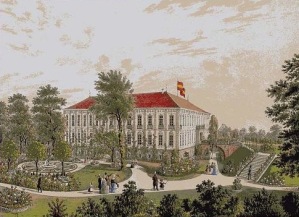 in September 1862, «we had met a lot while knowing each other little; for a few years, we had seen each other more closely, understood each other better and liked each other much more. He was a superior mind, a great and tender soul through the storms of his life, and a charming companion. Great creatures are rare». This spirit, this culture too, for the Duchesse de Dino was an indefatigable reader, her loyalty to the friendships she maintained with the Duchesse de Broglie, Royer-Collard, Thiers, Barante, Molé and Tocqueville, to mention only the French, and her need to be loved, are expressed in the four volumes of the Chronicle placed under her name by her granddaughter Marie Radziwill and consisting mainly of extracts from the letters she wrote over a period of thirty years to her very dear friend Adolphe de Bacourt.