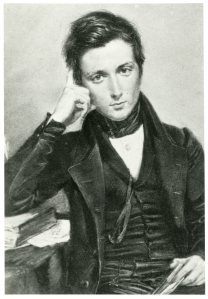
 At the age of 42, Pauline de Meulan gave her husband François Guizot the greatest gift he could have hoped for: a viable son, who was named François after his father, which was very common at the time, but also after his brother who had died shortly after his birth two years earlier, which may seem less fortunate today. Twenty-two years later, in 1837, the death of this same young François caused his father the deepest wound of his life, despite his double widowhood. For the rest of his life, he evoked «the charming son», «the charming creature» that he had lost, and whose face remained with him.
François had been brought up in the spirit of freedom and the awakening of intelligence that his parents were imbued with. Hadn't they, the two of them alone, founded and written the Annals of Education, In 1811 and 1814, Guizot was one of the founders of the Pestalozzi Foundation, which promoted the innovative teaching methods of the Swiss philosopher Pestalozzi, based above all on a love of children. Guizot had felt this powerful love for children from a very early age and retained it well into old age. His son François benefited from it intensely, as the correspondence between his parents during his early childhood shows. A pampered but not spoilt child, he did well at the Collège de Bourbon (now the Lycée Henri IV), passed the Polytechnique entrance exam and went on to study law: «I make no effort to push my son in this or that direction; he has made up his mind about his career. The magistracy appeals to him and to me. When he gets there, if he develops a taste for politics, and if it comes looking for him, he'll have an excellent starting point. It was as if his father thought he could succeed him in this field as in others. For he was also counting on him to mentor his younger sisters and brother, since Eliza Dillon's death in 1833, to carry on the family's hopes and perpetuate its name: »His future was my future; the future of my pride; the pride of the duration of a family founded.« Their conversation, tender and trusting, would last forever; he was her best friend. It was for him that in August 1836 he had bought Val-Richer, entrusting him with the task of designing its layout and embellishment. And it was there that young François contracted the cold, then the pneumonia that was to kill him, for the lungs were the congenital weakness of the de Meulan family, which had killed his mother ten years earlier. His father endured his son's agony hour by hour, to the point of incorporating it, which he recorded in heart-rending terms: »I don't think he suffers much; and yet suffering is imprinted on all his features. I must not let my thoughts linger there. I won't be able to call him back. «I heard his last sighs. They woke me up. I arrived in time to take them in, to receive her last look. My poor child! He loved me so much! He knew so well how much I loved him! »I search all day long for the destroyed face, the extinguished speech of my poor child. It was still him. Nothing resembles consummate evil, complete absence. A portrait of the young man, which Guizot always kept within sight, shows a fine, slightly melancholy face, with his father's large black eyes, and a head taller than him. His death was a public event. Visit Universal monitor broadcast the news: «The kindness of his character and the precocious elevation of his spirit had made him a dear friend to all the youth of Paris, and a valuable pupil to the men who teach science». On 18 February, in the Chamber of Deputies where Guizot was defending his proposed reform of secondary education, President Dupin paid tribute to this colleague who «had shown, by his virtuous resignation, how far courage can go in sorrow». And, in a lengthy account, the Journal des débats describes the funeral in vivid terms.
As sociable as his father, François had forged many friendships among his fellow students. His father took them up, showing affection and protection to Joachim Meurand, whom he took into his practice, and to Louis Béhier, who became the family doctor. The death, crushed by a car, of an old dog that had belonged to his son was a real sorrow to him.